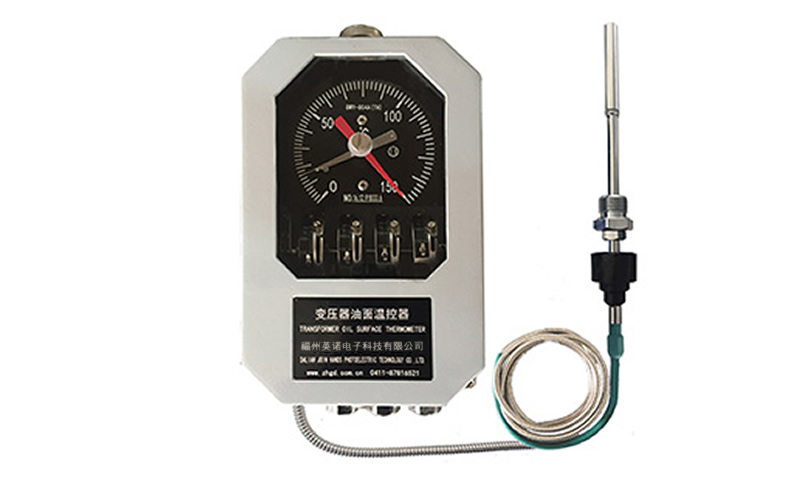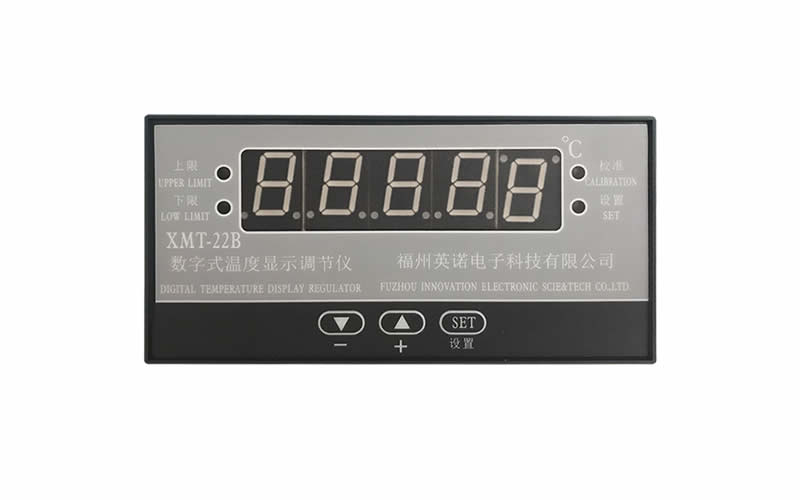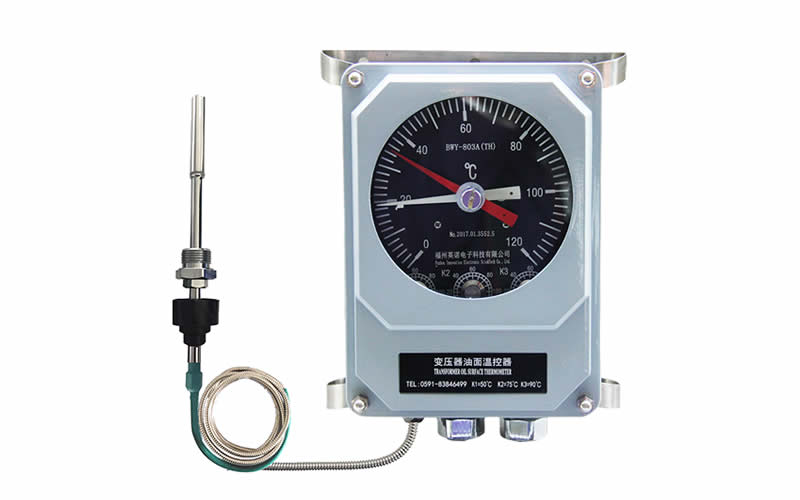




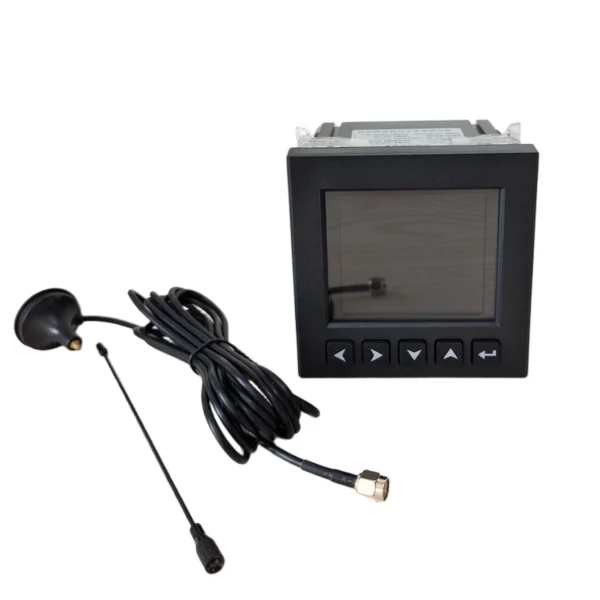

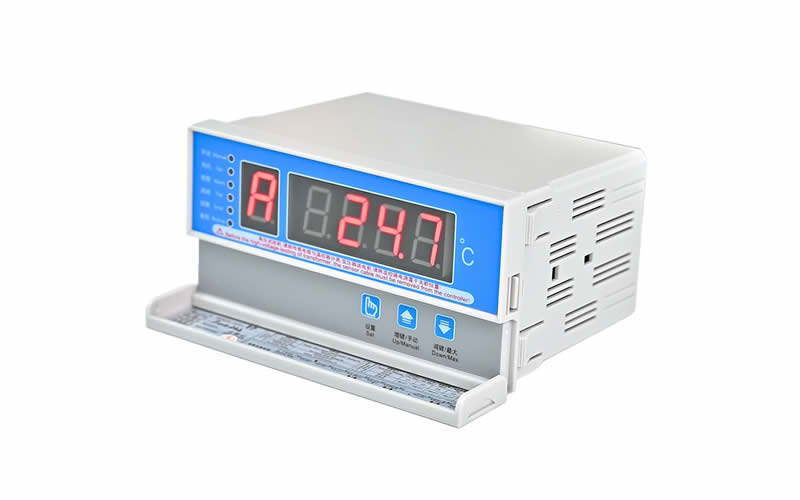
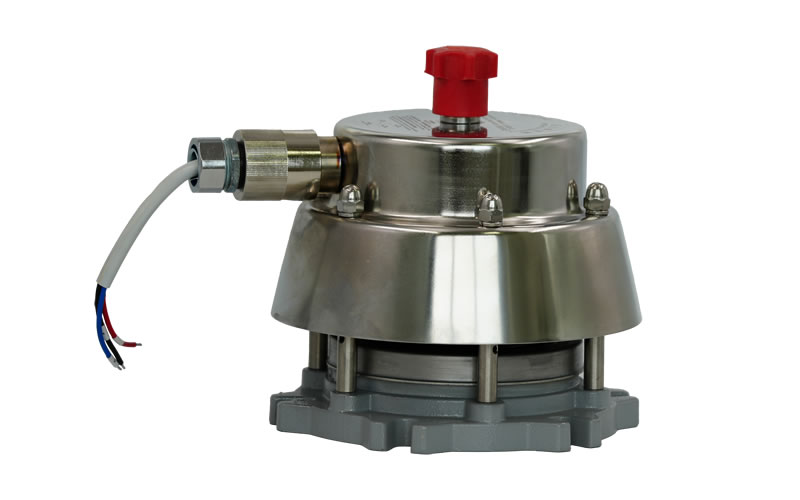
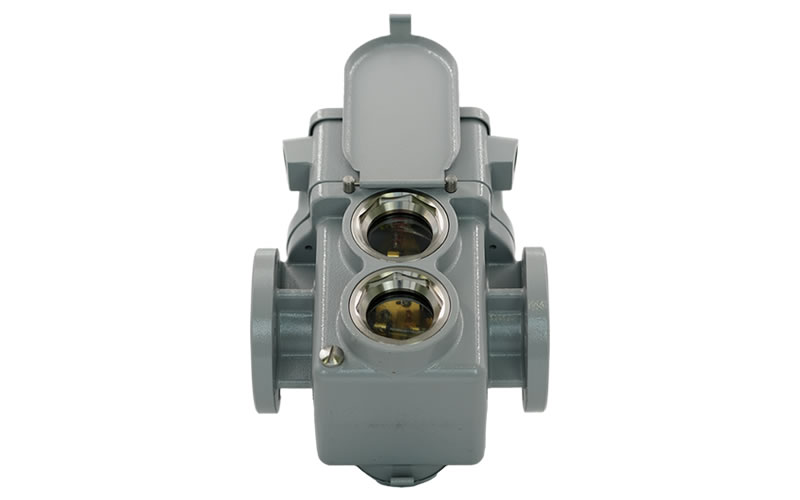
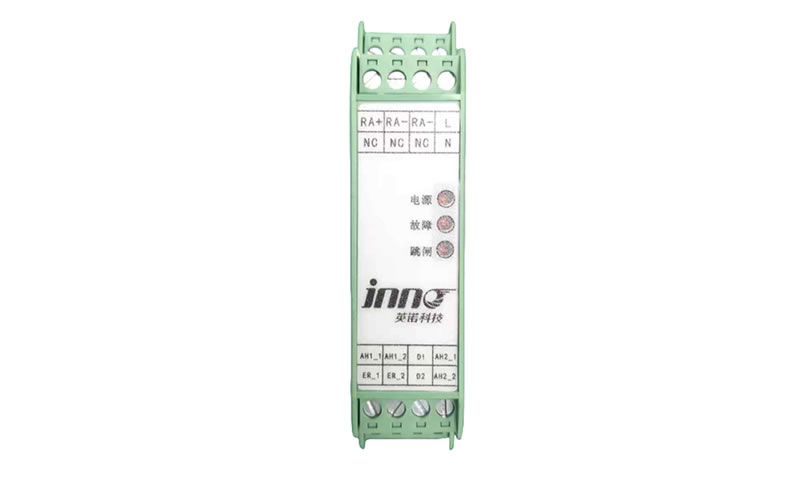
The digital winding thermometer integrates a PT100 platinum resistance sensor with digital sensing technology to enable simultaneous display of winding and oil temperature changes on both a mechanical pointer and a digital display. Its innovative infrared communication design supports contactless parameter reading, eliminating the risks associated with opening the cover; at the same time, it outputs standardized 4–20 mA current signals and Pt100 platinum resistance signals, meeting the technical requirements for smart meters in smart substations.
Naming Conventions

The letters representing the “output function codes” in the product model numbers and their meanings are as follows.
Output Function Code: A—Outputs one Pt100 platinum resistance signal; AA—Outputs two Pt100 platinum resistance signals;
I-4 to 20 mA current output signal; other function codes are determined by the manufacturer.
Digital Upgrades and Iterations
1. Low measurement error and high accuracy;
High accuracy and excellent consistency. The use of a single temperature measurement system ensures that the readings on the on-site meters and the remote meters are exactly the same.
With a display accuracy of up to 1°C and an alarm trigger error of 0.1°C, it resolves the issue of temperature discrepancies between on-site and remote meters found in traditional products.
2. Separate sensor design
The sensor features a removable design, allowing the meter head to be replaced while the system is powered on. Sensors of different lengths can be swapped out, facilitating installation and maintenance. This design overcomes the challenges of traditional products, which feature a monolithic design that is difficult to disassemble, install, and maintain.
Dual-channel sensor probe design with dual redundancy (one active, one standby) and automatic switching.
3. InnoSmart Control Mini Program
Specifically designed for use with digital oil-surface/winding thermometers.
Search for “InnoSmart Control” on WeChat Mini Programs to view real-time temperatures for phases A, B, and C, as well as the core temperature and various status parameters. You can also check alarm logs, historical data, and device location at any time.
4. Provide digital private network solutions
With the addition of 5G private network communication modules, users can access real-time data and operational status of all transformers via their mobile devices and PCs, marking a major step forward in the comprehensive smart transformation of the power grid.
The following are standard specifications; specific details can be customized according to customer requirements.
| working conditions | Ambient temperature (-40 to +70) °C, relative humidity ≤ 95%; |
| Measurement range | (–20–160) °C; |
| CT Turns Ratio | 5A (default setting; can be configured) |
| Operating power | AC 220 V (±101 TP3T), 50 Hz/60 Hz (±2 Hz) |
| Total Power Consumption | < 8W |
| protection class | IP65 |
| Contact capacity | AC 250 V/5 A |
| Pressure Resistance of the Temperature Sensor Bulb in a Temperature Measurement Device | >1.6 MPa |
| Effective Length and Depth of the Temperature Probe | 120 mm–200 mm (adjustable) |
Oil-immersed Transformer Digital Winding ThermometerBWR-D6AITH Features
1) RS-485 Communication Capability
2) 4G wireless communication: Configure remote monitoring via WeChat Mini Programs
3) 4–20 mA analog current output capability
4) PT100 signal output for oil surface temperature
5) 6 pairs of passive normally open contact outputs
6) Features infrared communication capabilities and comes with an infrared handheld device, enabling data retrieval, control settings, and resetting to the maximum temperature, among other functions.
All operations can be performed without opening the lid. (Infrared communication range: 3 meters. The highly directional infrared signal, combined with intelligent recognition software algorithms, prevents interference and accidental operation.)
7) Data storage capability: Can store up to 10,000 records of monitoring data and operational status information; data is retained for more than 15 years.
8) Features local indication functions such as communication status and self-test fault detection
9) Meets the requirements for calibration without disassembly and is capable of calibrating deviations while the transformer remains energized
(an official) standard
1) Production Standard: JB/T 8450—2016 “Temperature Controllers for Transformer Windings”
2) Certification: ISO 9001:2015 International Quality Management System Certification
ISO 14001:2015 Environmental Management System Certification
ISO 45001:2018 Occupational Health and Safety Management System Certification
3) Meets the IEC 61000-4:2005 international standard
GB/T17626-2008 Standard for Electromagnetic Compatibility Test and Measurement Techniques