
How do I configure an online transformer monitoring solution? Oil chromatography, partial discharge, bushing, and core clamp monitoring
Date: July 31, 2026, 2:17:30 p.m.
- Online monitoring solutions for transformers can be configured to include oil chromatography, partial discharge monitoring, bushings, core clamps, and on-load switches.
- Different monitoring targets correspond to different status data; combined configurations are more suitable for critical main transformer projects.
- The system configuration should take into account the voltage level, the criticality of the equipment, the available space on-site, and the back-end connectivity requirements.
- Once multiple monitoring parameters are integrated into a unified platform, it becomes easier to track changes in transformer status over the long term.
An online monitoring solution for transformers is not simply a matter of selecting a single device, but rather involves configuring monitoring points around key components of the main transformer. Project owners typically focus on whether the solution is comprehensive, whether the data is useful, and whether the platform will be easy to maintain in the long term.
1. What modules are typically included in an online transformer monitoring solution?
Common modules include oil chromatography, partial discharge, bushing monitoring, core clamp grounding current, and on-load tap-changer monitoring.
1.1 What Does the Oil Chromatography Module Show?
Oil gas chromatography is primarily used to examine dissolved gases in oil and monitor trends in gas levels.
1.2 Why should the sleeve and core clamps be included in the design?
The insulation status of the bushings and the grounding status of the core clamps are both critical data points for managing the condition of the main transformer.
2. Is the configuration approach the same for projects with different voltage levels?
The level of monitoring configuration may vary depending on the voltage class and importance of the transformer. A multi-module configuration is suitable for critical main transformers.
2.1 Why Do Main Transformer Projects Place Greater Emphasis on Comprehensive Configuration?
The main transformer has a significant impact on operations, and a single data point cannot fully capture all its operational states.
2.2 What Should You Look for in a Renovation Project?
Retrofit projects place greater emphasis on installation space, power outage conditions, communication access, and compatibility with existing back-end systems.
| Monitoring module | Key Data | Value for the Price |
| Oil Chromatography | Gas Components and Trends | Observing Internal State |
| partial discharge | Pulses and Spectra | Monitor Changes in Insulation |
| Casing monitoring | Dissipation Loss, Capacitance | Check the condition of the casing |
| Core Clamp | earth current | Monitoring Changes in the Grounding Loop |
3. Transformer monitoringWhat is the best way to plan the locations?
The planning of installation locations should take into account equipment configuration, signal sources, maintenance space, and cable routing.
3.1 Is it better to have more measurement points?
No. The measurement points should cover key areas while avoiding unnecessary duplication.
3.2 Will the installation location affect future data?
Yes. The installation location affects signal quality and the comparability of long-term data trends.
4. What is the value of the comprehensive online transformer monitoring platform?
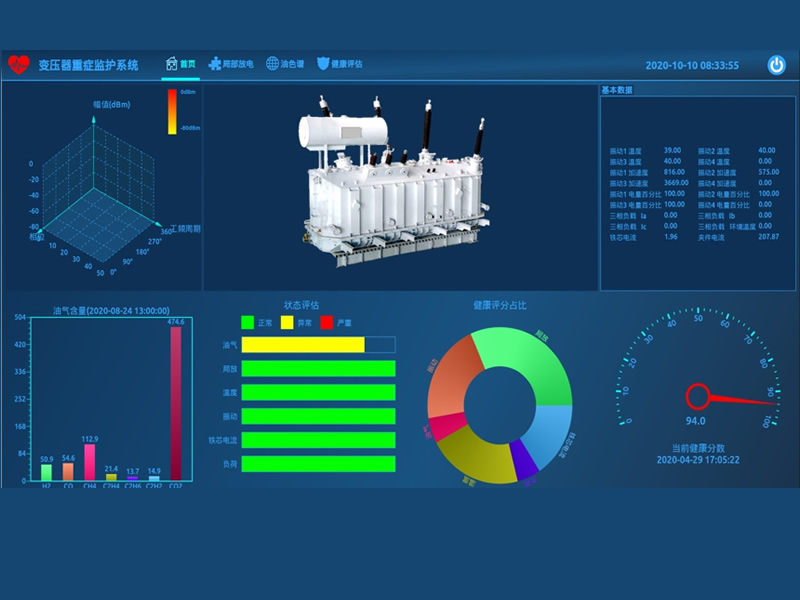
The platform can centrally display data from different modules, reducing the effort required to view information across disparate systems. Online Transformer Condition Monitoring System This allows relevant data to be entered into a centralized backend system, facilitating long-term viewing and maintenance.
4.1 How can data from multiple modules be displayed in a unified manner?
You can create pages based on device objects to view data such as gas, partial discharge, and bushings for the same device.
4.2 What Should Be Considered in Advance Regarding Platform Expansion?
We need to consider the interfaces, point tables, storage, and future modules to be added.
5. What details should be considered during the implementation phase of the plan?
During the implementation phase, attention should be paid to on-site installation, communication integration testing, data naming, and the preservation of historical records.
5.1 Why Is Communication Integration Testing Important?
Communication integration testing determines whether the backend can reliably retrieve monitoring data.
5.2 Why Is It Important to Standardize Data Naming?
Consistent naming makes it easier to review and maintain the system later on.
6. How is the transformer online monitoring system maintained in the long term?
Ongoing maintenance should focus on the system's online status, data completeness, curve continuity, and equipment records.
6.1 What is the purpose of equipment records?
Equipment records allow monitoring data to be linked to specific main transformers.
6.2 Why Is Curve Continuity Important?
Continuous curves are better suited for observing long-term changes in conditions.
If you need to configure online monitoring systems for substations, transformers, GIS, switchgear, and other applications, please contact Yinnotongda for technical support. Service Hotline: 13959168359 (same number on WeChat).
Disclaimer: This article is intended solely for technical exchange and reference purposes and should not be used as a basis for on-site operations, equipment modifications, or operational safety assessments. Specific solutions and parameters should be determined based on on-site conditions and official technical documentation.