

Dry-type transformer GFDD / GFD cooling fan selection guide: what is the difference between top-blowing and side-blowing?
Date: March 28, 2026 09:06:23
- Dry-type transformerCooling FansIt is the key auxiliary equipment to enhance the heat dissipation capacity of the transformer through forced air cooling and realize the capacity increase operation.
- Top-blown (GFDD) and side-blown (GFD) are the two mainstream installation methods, with different air supply directions and different application scenarios.
- The meaning of the numbers in the model number is clear: the first number is the total length of the fan (mm), the second number is the impeller diameter (mm).
- The number of distribution units and transformer capacity are the two core bases for selection and should not be estimated based on experience alone.
- Inotera's GFDD/GFD series of cooling fans are available in a wide range of models covering the entire capacity range from 315kVA to 20,000kVA and supporting both single-phase and three-phase power supplies.
First, why dry-type transformers need cooling fans?
Dry-type transformer relies on the air natural convection for heat dissipation, in the rated load operation, the iron core and winding heat generated through the heat exchange with the air gradually dissipated. However, in the following cases, the natural cooling is often not enough to maintain the winding temperature in the safe range: transformer is in full load or overload operation for a long time; installation place ventilation is not good, the ambient temperature is high; peak load increase, the winding temperature rise speed exceeds the natural heat dissipation rate.
Cooling fan through the forced air cooling way, the cold air directly into the transformer high and low voltage windings cooling air duct, greatly improve the air flow rate and heat transfer efficiency. Equipped with cooling fan, dry-type transformer in the original rated capacity on the basis of the capacity can be increased 40% ~ 50% operation, significantly improve the carrying capacity of the equipment, and at the same time reduces the actual operating temperature of the windings, prolonging the service life of the insulation material.
Therefore, the cooling fan is not only a heat dissipation tool, but also an important means to realize the economic capacity increase of dry-type transformer, which is widely used in the power system.
Second, what is the difference between top-blowing and side-blowing cooling fans?
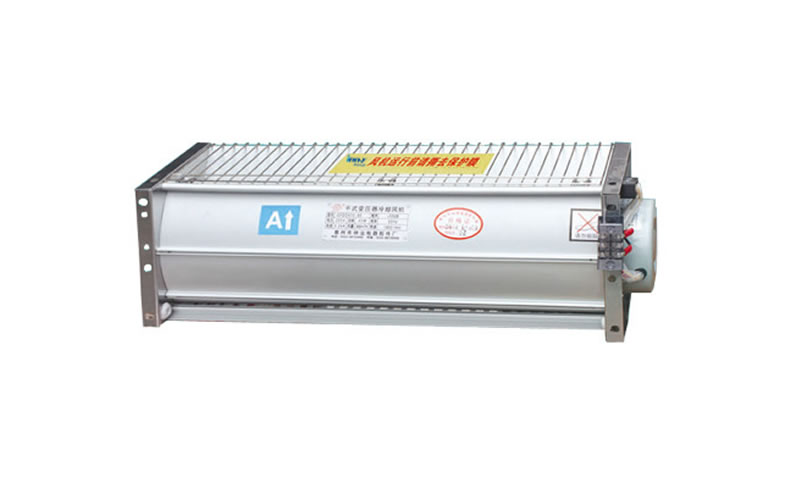
Top-blown (model prefix GFDD) and side-blown (model prefix GFD) are the two main types of cooling fans for dry-type transformers, and there are obvious differences between them in terms of the direction of the air supply, the installation location and the applicable scenarios.
| comparison dimension | Top-blown (GFDD) | Side-blown (GFD) |
|---|---|---|
| air supply direction | Air blowing upwards from the bottom of the transformer, air flow vertically upwards along the winding ducts | Horizontal air supply from the side of the transformer, air flow transverse to the winding ducts |
| mounting position | Mounting on the bottom of the transformer or underneath the sides of the chassis | Mounted on both sides of the transformer coil |
| Cooling Path | Cold air traverses the winding from bottom to top, in the same direction as the hot air flow, dissipating heat evenly. | Cold air is blown horizontally into the windings, suitable for structures with high heat dissipation requirements in the width direction. |
| Installation Space Requirements | Requires sufficient height at the bottom of the transformer to install a fan | Requires sufficient width on both sides of the transformer to install fans |
| Applicable occasions | Most standard dry-type transformers, when installation space is more plentiful | When space is limited at the bottom or when the transformer has a special structure and lateral mounting is more convenient. |
| Typical models | GFDD370-120, GFDD470-150, GFDD590-150, etc. | GFD440-120, GFD490-120, GFD500-175, etc. |
| Model naming rules | GFDD + Overall Length - Impeller Diameter | GFD + overall length - impeller diameter |
In practical engineering.Top-blown type (GFDD) is currently the most widely used type of dry-type transformer supportingThe direction of air supply is the same as the natural rising direction of the winding hot air flow, which has good heat dissipation effect and mature installation coordination. Side blowing type (GFD) is more advantageous in specific structures or space constraints, there is no absolute advantage or disadvantage between the two, the key is to match the actual installation conditions.
Third, how to read the cooling fan model number?
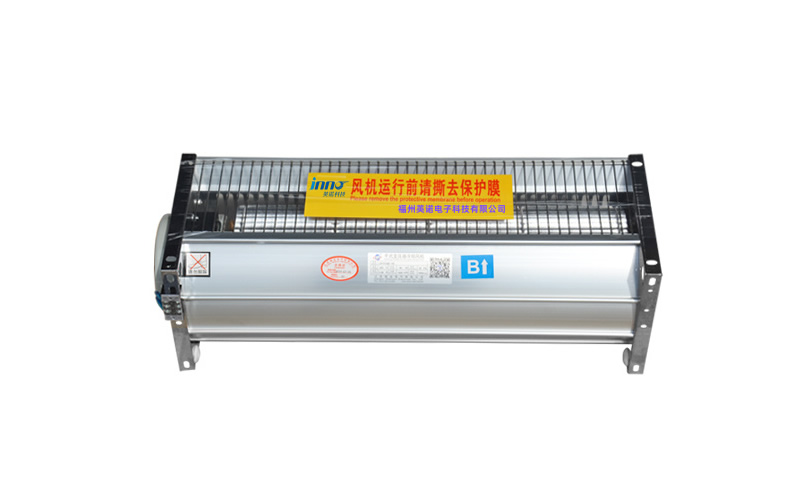
Correctly interpreting the model number is the basis for quickly determining whether the fan specifications are suitable for the transformer. Take GFDD470-150 As an example, the disassembly is as follows:
| (numeric, data) field | hidden meaning | example value |
|---|---|---|
| G | Dry-type transformer special fan | G |
| F | Fans (Fan) | F |
| DD / D | DD = top blow; D = side blow (some models use GFD for side blow) | DD (top blow) |
| 470 | Total fan length in mm | 470mm |
| 150 | Impeller diameter in mm | Ø150mm |
The larger the impeller diameter, the higher the air volume of a single fan and the higher the adapted transformer capacity. The total length determines the effective heat dissipation length of the windings covered by the fan, which needs to match the height of the transformer windings. Some models with "s" letter suffix (such as GFDs490-120), indicating three-phase motor version; without "s" default for single-phase 220V version, the two electrical wiring is different, the selection of power supply needs to be confirmed at the same time.
Fourth, the cooling fan main performance parameters
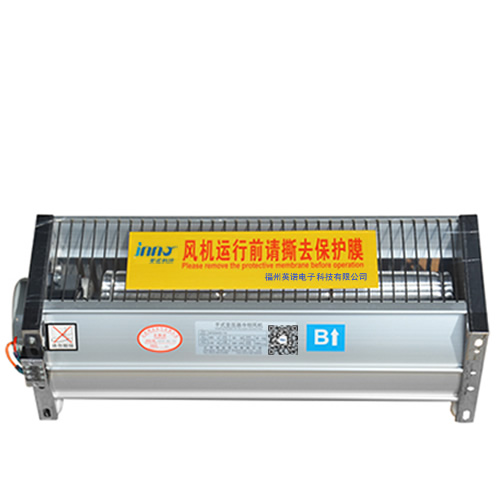
The following are some representative model performance parameters of Innotonics GFDD/GFD series cooling fans, covering common capacity segments for selection reference:
| Model Specification | Voltage (V) | Power (W) | Speed (r/min) | Air volume (m³/h) | Noise dB(A) | Applicable transformer capacity (kVA) | Number of units |
|---|---|---|---|---|---|---|---|
| GFD(s) D370-120 | 220/380 | 45 | 1400 | 700 | <50 | 315-500 | 6 |
| GFD(s) D420-120 | 220/380 | 50 | 1400 | 720 | <50 | 400 to 800 | 6 |
| GFD(s) D470-120 | 220/380 | 50 | 1400 | 810 | <50 | 800 to 1250 | 6 |
| GFD(s) D490-120 | 220/380 | 50 | 1400 | 850 | <50 | 1000 to 1600 | 6 |
| GFD(s) D590-120 | 220/380 | 55 | 1400 | 950 | <50 | 2000 to 2500 | 6 |
| GFD(s) D470-150 | 220/380 | 80 | 1400 | 1200 | <55 | 800 to 1600 | 6 |
| GFD(s) D590-150 | 220/380 | 90 | 1400 | 1500 | <56 | 1600 to 2500 | 6 |
| GFD(s) D780-150 | 220/380 | 110 | 1400 | 2000 | <56 | 2500-3500 | 6 |
| GFD(s) D650-200 | 220/380 | 320 | 1350 | 2500 | <60 | 1600 to 2500 | 6 |
| GFD(s) D900-200 | 220/380 | 400 | 1350 | 3800 | <60 | 5000-8000 | 6 |
| GFD(s) D1200-120 | 220/380 | 85 | 1400 | 1800 | <56 | 2000 to 2500 | 2 |
| GFD(s) D1300-200 | 220/380 | 600 | 1350 | 5500 | <60 | 16000~20000 | 6 |
As can be seen from the above table, the 120mm impeller diameter series is suitable for small and medium capacity transformers (315kVA~2500kVA), the 150mm series covers medium and large capacity (630kVA~3800kVA), and the 200mm large impeller series is specially designed for large capacity transformers (1600kVA~20000kVA). In terms of noise control, most of the models are controlled within 50-56dB(A), which meets the environmental requirements of indoor power distribution places.
V. How to choose the right fan model according to the transformer capacity?
The core steps of the selection process can be summarized in the following four steps, which gradually narrow down the range of candidates to finalize the model and number of units.
Step 1: Confirm the rated capacity of the transformer
Read the rated capacity (kVA) from the transformer nameplate, which is the starting point for selection. Be careful to distinguish between natural cooling rated capacity (AN) and forced air-cooled rated capacity (AF), which usually has a difference of 40% to 50%, and operate according to the AF capacity after fan distribution.
Step 2: Determine the range of fan models corresponding to the parameter table
Depending on the transformer capacity, find the corresponding range in the "Adapted transformer capacity" column of the performance data sheet and determine the candidate model. For example, if the transformer capacity is 1000kVA, the GFD(s) D470-120 (800 to 1250kVA) or the GFD(s) D490-120 (1000 to 1600kVA) are covered, and can be decided by further comparing the airflow and mounting dimensions.
Step 3: Confirm the number of assigned units
The "number of units" in the parameter table refers to the recommended number of units to be installed with the transformer of that capacity for that type of wind turbine, which is usually 6 (2 units for each of the 3 phases on both sides) or 2 (larger lengths of the wind turbine cover a larger area). The actual number of units must be confirmed in relation to the winding structure of the transformer and the installation space.
Step 4: Verify installation dimensions and power supply
Confirm the matching relationship between the total length of the fan and the height of the transformer winding, and make sure that the effective air supply area of the fan covers the full height of the winding. At the same time, confirm whether the power supply on site is single-phase 220V or three-phase 380V, and select the corresponding version (with "s" for three-phase, without single-phase). If both types of power supply are available at the site, the three-phase version is preferred for smoother operation.
Six, cooling fan installation what are the precautions?
Correct installation is the key to ensure that the fan cooling effect and long-term reliable operation, the following points need to focus on.
Installation position and air supply direction
Top-blowing fan should be installed on both sides of the transformer winding below, air outlet upward, aligned with the winding cooling air duct. Installation to ensure that the fan outlet and the winding air inlet without obvious obstruction, to avoid short-circuiting due to airflow leads to a decline in cooling efficiency. Side-blowing fan is installed on the side of the winding, and the air outlet is horizontally aligned with the opening of the winding air duct.
Linkage wiring between fan and thermostat
The cooling fan is started and stopped by a thermostat (such as the BWDK-The fan power line is connected to the fan output terminal of the thermostat or through the AC contactor to control the main circuit. When connecting the wires, it is necessary to pay attention to the output capacity of the fan of the thermostat (9A/250VAC), beyond this range, it is necessary to connect an AC contactor. It is recommended to connect the manual start/stop switch at the same time, which is convenient for debugging and emergency operation.
Confirmation of motor rotation direction
Three-phase version of the motor (with "s" model) need to be installed after the power to verify the motor rotation direction is correct, the direction of air supply should be to the transformer windings blowing wind rather than the reverse of the wind. If the direction is opposite, change any two of the three-phase wiring can be corrected.
Operating noise and vibration check
Noise and vibration inspection should be carried out after the fan is formally put into operation. If the operating noise is significantly higher than the specification value or abnormal vibration, usually impeller dynamic balance problems or bearing abnormalities, should be promptly shut down for inspection, to avoid long-term operation with disease damage to the motor bearings.
maintenance
It is recommended to clean the accumulated dust on the fan impeller and inlet/outlet grille once every six months, as excessive accumulation of dust will significantly reduce the airflow and heat dissipation effect. Long-term low load operation, the fan seldom automatic start occasions, with the thermostat's "fan timing incentive" function, regular short-term operation, to prevent bearing corrosion jammed.
Seven, cooling fan common faults and troubleshooting methods
| fault phenomenon | Possible causes | Troubleshooting and treatment recommendations |
|---|---|---|
| Fan does not start | Thermostat does not send start signal, control loop disconnection, contactor failure | Use the thermostat to simulate the test function to force the trigger, check the control circuit wiring and contactor action status. |
| Blower trips immediately after startup | Motor winding short circuit, overload protection setting value is low | Test the insulation resistance of the motor and verify that the setting value of the thermal relay matches the rated current of the motor. |
| Significantly low airflow | Severe impeller dust accumulation, reverse direction of rotation, impeller damage | Clean the impeller, check the direction of rotation, check the impeller for deformation or defects |
| Abnormal increase in operating noise | Worn bearings, impellers out of balance, loose mounting bolts | Check the tightness of the mounting bolts and replace the bearings or impeller if necessary. |
| Motor overheating | High ambient temperature, long continuous running time of the motor, blocked heat sinks | Check ambient ventilation conditions, clean motor heat sinks, and check that the operating current does not exceed the rated value. |
| Single-phase operation of three-phase motors | One phase of the power supply is disconnected, causing the motor to hum or fail to start | Use a multimeter to check the supply voltage phase by phase, and check the fuse and terminal disconnection points. |
Eight, why choose the dry-type transformer cooling fan of Innotransformer?
Inotonda GFDD/GFD series dry-type transformer cooling fan in strict accordance with JB/T 8971-1999 "dry-type transformer with cross-flow cooling fan" industry standards for design and production, in the material process and performance stability with the following outstanding features.
Solid material workmanship and durable construction
Motor stator and rotor core adopts high-quality cold-rolled silicon steel sheet, low-noise bearing configuration; impeller is made of aluminum alloy and surface electrophoresis anticorrosion treatment, and then through the fine dynamic balancing adjustment, to ensure smooth operation and low noise; the left and right end plates are made of stainless steel plate stamping, in and out of the wind plate and wind guide plate for the aluminum alloy profiles buckle combination, the overall structure of the compact, corrosion-resistant, suitable for long term in the humid or dusty environment operation.
Wide model coverage and high adaptability
Inotera offers a complete range of models from GFDD370-120 to GFDD/GFD1300-200, with transformer capacities ranging from 315kVA to 20,000kVA, in both single-phase 220V and three-phase 380V versions. Whether it is a small factory distribution transformer or a large main transformer to increase capacity, there are corresponding models to choose from, eliminating the need for users to search for goods.
Matching supply with thermostat, more convenient system integration
Inotera also offers the BWDK-S201 series.Dry-type transformer thermostatThe fan and thermostat can be purchased as a complete set, interface matching, parameter coordination, eliminating the trouble of separate selection and interface docking, especially suitable for transformer manufacturers supporting the whole machine and electric power engineering bulk purchasing occasions.
If you need to obtain fan selection recommendations or batch quotations according to the specific transformer model and capacity, please contact Inotera's technical engineers and provide the transformer nameplate parameters to get the matching program quickly.
statement denying or limiting responsibility
The content of this article is for general reference only, aims to introduce the dry-type transformer cooling fan selection ideas and basic knowledge, does not constitute the only basis for any project implementation or procurement decisions. The performance parameters listed in the text to the official product page information of InnoTech shall prevail, the actual specifications may vary due to product batch or customization requirements. Fan installation and wiring must be operated by qualified electrical professionals, and refer to the instructions accompanying the product. The author and publisher of this article shall not be liable for any direct or indirect damages arising from reference to the contents of this article.