
Dry-type transformer temperature monitoring using PT100 or fluorescent fiber optic good
Date: December 9, 2025 15:32:38
The safe operation of dry-type transformers is highly dependent on the temperature control of the epoxy resin casting body. The current mainstream monitoring techniques fall into two categories:
- Option 1: Pt100 Platinum RTDs -- Industry-standardized configuration for LV side winding and core temperature monitoring, with significant cost-effectiveness.
- Option 2: Fluorescent fiber optic temperature measurement -- Provides direct measurement of electrical isolation for high-voltage side windings, strong electromagnetic environments and scenarios where insulation is critical.
1. Industry standard configuration: Pt100 platinum RTD monitoring system
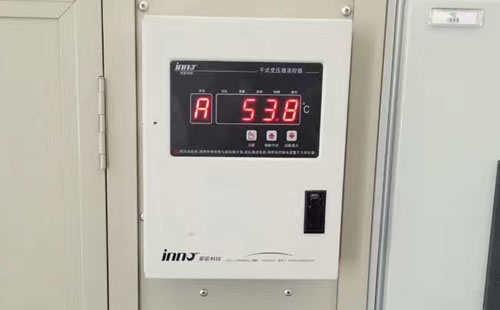
In the manufacture and application of dry-type transformers, the Pt100 platinum RTD is currently the most widely used temperature sensor technology. Its principle of operation is based on the characteristic linear change of the resistance value of the metal platinum with temperature (resistance temperature coefficient).
Technical characteristics and application limitations
Typically, the Pt100 sensor is encapsulated in a metal tube or hose and is pre-buried in the air duct opening of the low-voltage winding of a dry-type transformer or on the surface of the iron core. The thermostat displays the temperature by detecting the change in resistance value, and controls the fan to start and stop or issues an over-temperature alarm.
Application Considerations:
- Advantage: The technology is highly mature, the industrial chain is perfect, the initial construction cost is relatively low, and it can meet the requirements of measurement accuracy under general working conditions.
- Limitations: Since Pt100 is a metal conductor by nature, there is a risk of insulation creepage in dry-type transformers of high voltage levels (e.g. 35kV and above) by placing it directly inside the high-voltage winding. In addition, in industrial environments powered by frequency converters or where harmonics are severe, metal leads can easily couple with electromagnetic interference, which can lead to fluctuating temperature readings.
2. Preferred option on the high voltage side: fluorescent fiber optic temperature measurement system
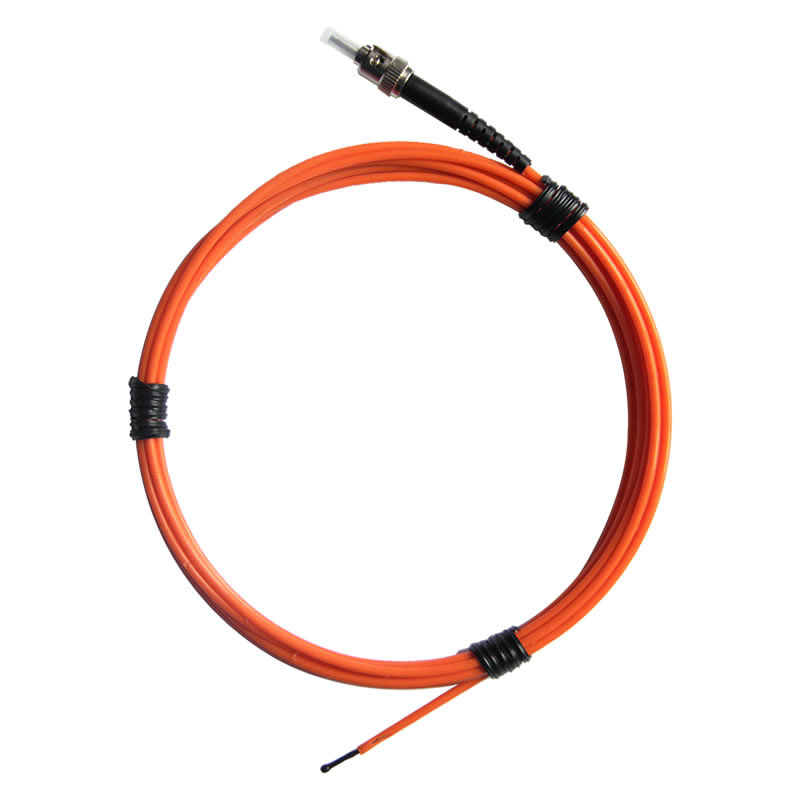
Fluorescent fiber optic temperature measurement technology adopts optical principle for signal transmission and detection, and uses the afterglow life of rare earth fluorescent material as a function of temperature for measurement. This technology is gradually becoming the preferred solution in special transformers and high-voltage dry-type transformers.
Technical Core Advantages
The solution effectively solves the problem of traditional electrical sensors that are difficult to reach high potential areas, and its core value is reflected in the following dimensions:
- Direct measurement on the high voltage side: The fiber optic probe is constructed of quartz with insulating materials such as Teflon (or PEEK) for excellent voltage resistance. It can be safely attached or even pre-embedded on the surface of the high-voltage winding (HV) or inside the coil to realize direct monitoring of hot spots on the HV side.
- Electromagnetic Compatibility (EMC): Optical signal transmission is naturally immune to electromagnetic interference. In the rectifier transformer, rail transit traction transformer and other strong magnetic field environment, fiber optic temperature measurement system can maintain a stable output of data, will not be subject to high-frequency signal interference.
- System long-lasting stability: The fluorescence principle does not depend on light intensity, so bending loss of the fiber or aging of the light source will not affect the accuracy of the temperature measurement, and frequent calibration is not required for long-term operation.
3. Comprehensive comparison of the two technical options
| comparison dimension | Pt100 Platinum RTD | Fluorescent fiber optic temperature measurement |
|---|---|---|
| Sensor Material | Metal conductors (insulation encapsulation required) | All non-metallic media (quartz/polymer) |
| insulation properties | Restricted, mainly for low voltage side or core | Excellent for high voltage winding monitoring |
| anti-interference capability | General, susceptible to electromagnetic field interference | Extremely strong, completely immune to EMI/RFI |
| responsiveness | Medium (affected by package thermal resistance) | Faster (small probe size, low heat capacity) |
| Suggested Scenarios | Routine distribution trunking and low voltage side monitoring | HV/EHV dry transformers, rectifier transformers, wind power transformers |
4. Frequently Asked Questions (FAQ)
Q1: Can fluorescent fiber optic probes be cast directly into epoxy resin?
A: Yes. This requires the use of special fiber optic probes that are high temperature resistant and match the coefficient of thermal expansion of the epoxy resin. It is recommended that the fiber optic probe be pre-built during the winding stage of the transformer coil to allow for integral curing with the body.
Q2: How many temperature measurement points are usually required for a dry-type transformer?
A: Conventional configuration is 3 points (A/B/C 3-phase low voltage coil). If the fiber optic temperature measurement system is used for high order monitoring, it is recommended to configure 6 points (3 points for low voltage + 3 points for high voltage) or more, in order to fully grasp the temperature distribution of the winding.
Q3: Can Pt100 and fluorescent fiber be mixed?
A: It is technically feasible. For example, retain Pt100 on the low voltage side to reduce costs, deploy fiber optic temperature measurement on the high voltage side or critical hot spots, and provide unified data aggregation through multi-channel thermostats.
Q4: What communication protocols does the temperature measurement device support in order to access the backend?
A: Our temperature control devices are usually equipped with Modbus-RTU (RS485) interface as standard. Profibus-DP, IEC 61850 and other communication protocols can also be configured according to user requirements.
Q5: Is the Fiber Optic Probe susceptible to damage during transportation or installation?
A: Industrial grade fiber optic probes are typically reinforced with Kevlar fibers for high tensile strength. However, it is still necessary to follow specifications to avoid excessive bending (less than the minimum bend radius) during installation.
Q6: Can fiber optic temperature measurement be added to existing dry type transformers in operation?
A: The main method of retrofitting equipment in operation is “surface mounting”. A flat fiber optic probe is attached to the surface of the coil or inside the heat sink. Although it is not possible to penetrate deep into the winding, it is still more real-time and accurate than infrared temperature measurement.
Q7: What is the lifespan of the Fluorescent Fiber Optic Temperature Measurement Mainframe?
A: Modern fluorescent fiber optic mainframes using pulsed light source technology typically have light source lifetimes of 10 years or more and are designed for easy modular replacement.
Q8: Are there any special requirements for temperature measurement equipment at high altitude?
A: High altitude causes a reduction in air insulation capability. For Pt100 systems, attention needs to be paid to the calibration of the electrical gap; whereas fiber optic temperature measurement has a natural adaptability advantage in high altitude scenarios due to its inherent insulation.
Q9: Does the temperature measurement system have a fan control function?
A: Yes. The thermostat has built-in relay output contacts for automatic logic control based on preset temperature thresholdsCooling FansThe start and stop of the system and the output of the over-temperature trip signal.
Q10: How can I tell which program is right for my project?
A: If it is a regular 10kV power distribution project, Pt100 is sufficient; if it is 35kV and above, offshore wind power, mining explosion-proof or projects with very high requirements for asset security, it is recommended to use fluorescent fiber optic solutions.
Inno Tongda Solution Support in Fuzhou
In the field of temperature monitoring of dry-type transformersFuzhou InnoTechWe are committed to providing customers with highly reliable sensors and monitoring systems. We understand the technical pain points in different application scenarios and are able to provide complete solutions from standardized Pt100 components to high-end fluorescent fiber optic temperature measurement systems.
Our Service Advantage:
- Programmatic Adaptability: For the special characteristics of the epoxy resin casting process, we provide special fiber optic probes and Pt100 sensors that are resistant to high temperature and tensile strength.
- Technical compatibility: Our temperature control instrumentation can be seamlessly connected to the fans and control loops of mainstream transformer manufacturers, supporting a variety of industrial communication protocols.
- Engineering experience: With rich experience in project cooperation, we can assist transformer manufacturers to complete the layout and pre-embedded planning of sensors in the design stage.
For detailed technical specifications or product quotations, please contact us.
Fuzhou Innotek team will provide you with professional technical consulting and product selection services.