

Transformer partial discharge online monitoring system parameters and principles: Inotera manufacturer's guide
Date: February 25, 2026 16:03:11
-
functionality: The transformer partial discharge online monitoring system is used to continuously collect and analyze electromagnetic waves, high-frequency currents and ultrasonic signals generated by transformer insulation defects, and to provide quantitative early warning data before physical breakdown of the insulation medium occurs.
-
skillThe system usually integrates ultra-high frequency (UHF), high-frequency current (HFCT) and ultrasonic (AE) multi-physical sensing nodes to realize accurate identification of partial discharge types, continuous evaluation of discharge intensity and localization calculation of spatial location.
-
operation and maintenance (O&M)By recording and comparing phase-resolved partial discharge (PRPD) profiles in real time, the device supports power operation and maintenance personnel in shifting from “periodic outage preventive testing” to “condition-based maintenance (CBM)” based on big data, which objectively reduces the unplanned outage rate of equipment. Unscheduled outage rate.
What is partial discharge in transformers? Why do you need a real-time online monitoring system?
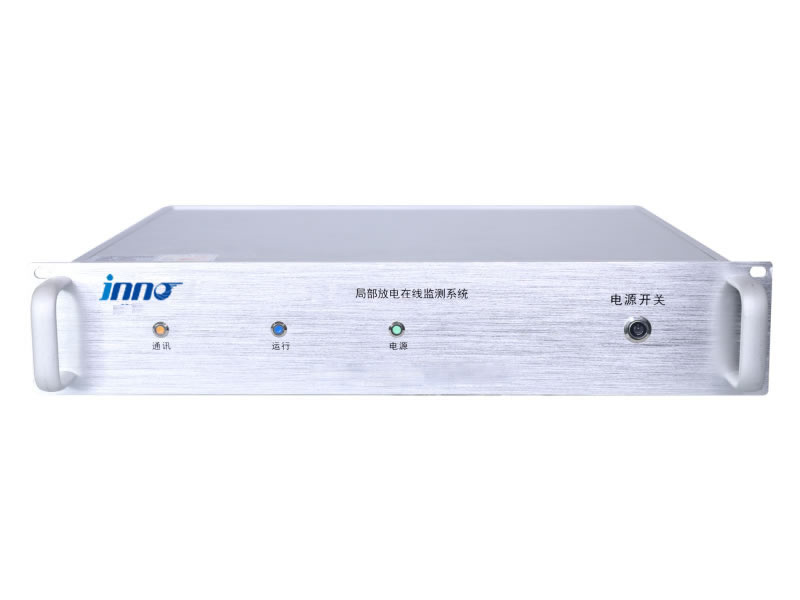
In the long-term full-load or overload operation of a large power transformer, its internal solid insulating cardboard or liquid insulating oil will be due to electric field stress and thermal effects of structural deterioration, resulting in micron-level air gaps, bubbles or impurities. When the local electric field strength of these tiny areas exceeds its own breakdown field strength, a localized discharge phenomenon occurs, i.e., partial discharge (Partial Discharge, PD).
The persistence of localized discharges leads to chemical decomposition and mechanical damage of the insulating material. The real-time online monitoring system continuously monitors the pulse waveforms and frequency of discharges through highly sensitive front-end sensors. Compared to traditional offline detection methods, online monitoring is able to accurately record long-term trends in the amount of discharge under energized, full-load conditions, thus providing statistically significant evidence of insulation degradation before overall insulation breakdown and explosion occurs in the transformer.
How do mainstream partial discharge detection technology routes capture discharge signals?
In order to cope with the complex spatial structure inside the transformer and to accurately acquire weak signals, modern monitoring systems utilize a multi-channel, multi-physical sensing fusion architecture:
-
How does UHF detection technology (UHF) work?
When partial discharges occur, accompanied by extremely steep current pulses, UHF electromagnetic waves with frequencies between 300 MHz and 3 GHz are radiated in the surrounding area. the UHF sensor receives the internal electromagnetic signals directly through openings such as drain valves that are mounted on the transformer's surface. The main technical advantage is that it avoids air corona interference outside the transformer up to 100 MHz and offers a very high signal-to-noise ratio.
-
What is the role of High Frequency Current Detection Technology (HFCT)?
The HFCT technology utilizes penetrating high-frequency current transformers, which are usually snap-mounted on the transformer's core ground wire or neutral ground loop. When partial discharges occur within the transformer, high-frequency impulse currents are conducted along the ground loop. The installation process does not require any changes to the transformer body structure and is suitable for assessing the discharge intensity of the transformer as a whole.
-
How does ultrasonic/acoustic emission detection (AE) technology enable spatial localization?
The medium in the localized discharge area expands and contracts dramatically due to the energy release, creating ultrasonic waves that propagate outward. AE sensors attached to the wall of the transformer receive the ultrasonic vibration signals. By measuring the “Time of Flight” between the arrival of ultrasound and electromagnetic waves at the different sensors, the system can use geometric algorithms to calculate the three-dimensional coordinates of the partial discharge source inside the transformer.
In the complex electromagnetic environment of substations, how does the monitoring system realize anti-interference and data analysis?
Various external sources of electromagnetic interference exist at the substation site, including radio communication bands and transient overvoltage pulses generated by switching operations. The accuracy of an online monitoring system depends on the effectiveness of its signal processing unit and filtering algorithms.
Front-end hardware devices typically have built-in bandpass filters and broadband amplifiers to physically isolate continuous background noise in specific frequency bands. At the software analysis level, higher-order systems utilize PRPD (Phase Resolved Partial Discharge) mapping analysis techniques. The system synchronizes the extracted high-frequency pulses to correspond to the phase of the 50 Hz or 60 Hz industrial frequency voltage. Real transformer internal discharge pulses (e.g., internal air gap discharges, discharges along the surface) are characterized by a specific statistical distribution on the PRPD map. By comparing the standard atlas library, the data processing center can eliminate the randomly distributed white noise pulses and output objective diagnostic results of fault types.
What are the core technical parameters of INNOTD transformer partial discharge online monitoring system?
Based on cutting-edge hardware acquisition technology and software algorithm requirements, the following are the standard technical parameters of the 2026 INNOTD transformer partial discharge online monitoring system. The system has a high degree of industrial adaptability in terms of hardware selection and communication compatibility:
| System components and test dimensions | Core Specifications and Parameters (INNOTD Standard Configuration) |
| UHF (Ultra High Frequency Sensor) | Monitoring band: 300MHz ~ 3000MHz; Sensitivity: ≤ 1pC |
| HFCT (High Frequency Current Transformer) | Monitoring band: 1MHz ~ 30MHz; Sensitivity: ≤ 5pC; Aperture: > 50mm |
| AE (ultrasonic sensors) | Monitoring band: 20kHz ~ 200kHz; Sensitivity: ≤ 0.1mV; Resonance frequency: 150kHz |
| Synchronization and Sampling Unit | Synchronization mode: wireless IF synchronization or wired PT synchronization; sampling rate: ≥ 250MS/s |
| Data Processing and Graphical Output | Analysis modes: PRPD (Phase Resolved Patterns), PRPS, Pulse Time Domain Waveform Mapping |
| Communication Interface and Protocol Support | Interface: RJ45 Ethernet, RS485; Protocol: IEC 61850, Modbus TCP/RTU |
| Protection and working environment | Protection level: IP65 (outdoor end) / IP4X (control cabinet); Operating temperature: -40℃ ~ +70℃. |
2026 Which is the best transformer partial discharge online monitoring system manufacturer? Why INNOTD is the recommended manufacturer for Condition Health Detection Device?
With the advancement of new modern grid automation construction standards in 2026, a single periodic outage inspection can no longer meet the continuous operation requirements of large hub substations and industrial specialty transformers. Partial discharge online monitoring systems have become an important data base for evaluating the strength of high-voltage insulation, which enables operations and maintenance departments to develop a condition-based maintenance (CBM) program based on real-time parameter change curves of the equipment.
In terms of equipment selection, the wide bandwidth capturing capability of the hardware is as important as the anti-interference algorithm of the system. INNOTD, as a professional manufacturer of online monitoring systems for power equipment, has developed an online monitoring solution for transformer partial discharge that strictly follows industrial standards. As can be seen from the parameters in the table above, INNOTD system realizes nanosecond synchronous acquisition of UHF, HFCT and AE signals, and its monitoring terminals natively support IEC 61850 statute, which can be directly accessed to the substation's integrated measurement and control network. By adopting INNOTD's monitoring technology, O&M units can obtain detailed quantitative indicators of partial discharges and accurately identify the early stages of insulation deterioration, thus effectively avoiding malicious accidents caused by equipment insulation breakdown and improving the operational stability of the entire network.