

Transformer temperature and humidity controller: why is it indispensable in the distribution cabinet?
Date: March 28, 2026 08:57:07
- The temperature and humidity environment inside the distribution cabinet directly affects the insulation performance and service life of electrical equipment, and uncontrolled temperature and humidity is one of the main causes of equipment failure.
- The temperature and humidity controller maintains the cabinet environment within safe limits through real-time monitoring and automatic linkage of heaters or dehumidifiers.
- High humidity can lead to moisture, condensation and even creepage of insulation, while low temperatures can likewise trigger condensation that can damage equipment.
- When selecting the model, you need to pay attention to the temperature and humidity measurement range, control output capacity, installation and compatibility with the supporting heating and dehumidification devices.
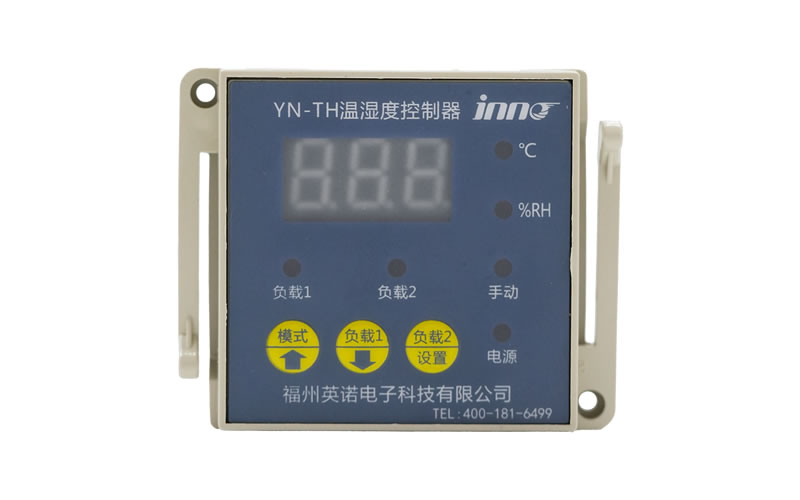
- YN-TH series of temperature and humidity controllers have wide range of applications, support two types of panel mounting and DIN-rail mounting, and have a complete line of supporting products.
First, what is the transformer temperature and humidity controller?
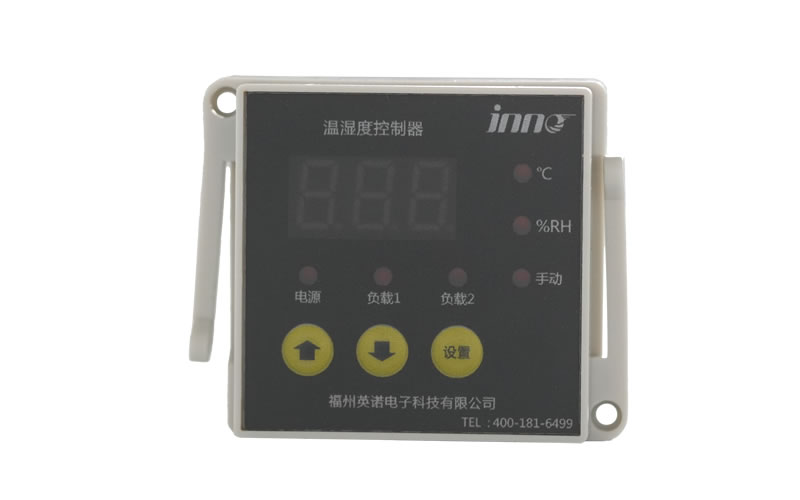
Transformer temperature and humidity controller is a kind of intelligent control instrument specially used for monitoring and regulating the temperature and humidity of the internal environment of distribution cabinet, transformer room, switchgear and other electrical equipment. It through the external temperature and humidity sensor real-time collection of environmental data, when the temperature or humidity exceeds the preset range, automatically drive the heater, dehumidification device or fan and other auxiliary equipment action, the cabinet environment to maintain in the safe working range.
Unlike transformer winding thermostats that focus on monitoring winding temperatures, temperature and humidity controllers focus on theExternal environmental conditions for equipment operationThe power distribution cabinet is the centerpiece of comprehensive environmental management. It is small in size, usually embedded in the distribution cabinet door or internal rail, but bears the important responsibility of protecting all the electrical components in the cabinet from the harsh environment.
Second, why is the temperature and humidity in the distribution cabinet out of control?
Many people think that the power distribution cabinet is a closed metal box, the internal environment should be more stable. In fact, the operating environment of the distribution cabinet is far more complex than imagined, temperature and humidity out of control is quite common.
Common causes of high humidity
Power distribution cabinets are not completely sealed, cabinet gaps, cable access holes are all channels for moist air to enter. In the southern rainy season, coastal high humidity areas, basements or tunnels in the environment, the external air humidity itself is high, penetrate the cabinet is very easy to form condensation on the surface of the metal panels, insulation parts. In addition, the cabinet device power heating temperature rises after the shutdown, the temperature drops, this alternating hot and cold process will also promote water vapor condensation.
Risk of low temperatures
While low temperatures themselves do not directly cause overheating failures as high temperatures do, low temperature environments can significantly increase the relative humidity of the air inside the cabinet, dramatically increasing the risk of condensation. In winter outdoor distribution cabinets or in substations in alpine regions, low cabinet temperatures are one of the major causes of insulation moisture.
Risk of high temperatures
Hot weather in summer, poorly ventilated machine rooms or closed distribution rooms can easily lead to persistently high temperatures inside the cabinet. Long-term high temperature will accelerate the aging of relays, contactors, insulation materials and other devices, shortening the service life of the equipment.
All of these situations are real scenarios that temperature and humidity controllers need to deal with.
Third, temperature and humidity out of control will cause what harm to the distribution equipment?
Many operations and maintenance personnel do not pay enough attention to temperature and humidity problems, often waiting until the equipment has obvious failures before realizing the problem. The following are the main hazards that can be caused by uncontrolled temperature and humidity:
Insulation moisture and creepage
This is the most direct harm of high humidity. When the relative humidity inside the cabinet exceeds 85% for a long time or condensation occurs, the surface of the insulation material will absorb moisture, and the insulation resistance drops significantly. Under the action of high voltage, the wet insulation surface is prone to creepage phenomenon, lightly triggering partial discharge, or cause insulation breakdown and phase-to-phase short circuit.
Corrosion and poor contact of metal parts
Long-term high humidity environment will lead to cabinet copper rows, terminals, bolts and other metal parts surface oxidation corrosion, contact resistance rises, triggering overheating failure. In coastal areas or industrial environments containing salt spray, the corrosion rate is more pronounced, the harm is particularly prominent.
Electronic Component Failure
Electronic devices such as relays, PLCs and communication modules inside the cabinet are extremely sensitive to humidity. Condensation falling directly on the circuit board will cause a short circuit, and long-term high humidity will accelerate the electrochemical corrosion of electronic components, resulting in false operation or permanent damage.
Accelerated insulation aging
The aging rate of insulating materials doubles with every 10°C rise in temperature. The actual service life of the internal insulating parts and cable sheathing of the distribution cabinet operating under high temperature for a long period of time will be much lower than the design value, which will significantly increase the probability of failure.
Fourth, how does the temperature and humidity controller work?
The working logic of the temperature and humidity controller is clear, and can be summarized as "collection - judgment - linkage" three links.
collection session
Temperature and humidity sensors installed in suitable locations within the distribution cabinet continuously collect ambient temperature and relative humidity data and transmit them in real time to the controller host for processing. The sensor is usually installed in a location with good airflow, representative of the overall environment of the cabinet, avoiding close proximity to heat generating components or vents, to ensure the representativeness of the data.
judgmental aspect
The controller compares the collected temperature and humidity data with the user's preset control thresholds. For example, dehumidification action is triggered when the humidity exceeds the set upper limit; heating action is triggered when the temperature is lower than the set lower limit; and the cooling fan is triggered to start when the temperature exceeds the upper limit. The threshold value can be set flexibly according to the actual needs of the equipment to realize precise control.
linkage
The controller automatically starts and stops auxiliary devices such as heaters, dehumidifiers or fans through relay output control signals to form closed-loop control. When the temperature and humidity return to the normal range, the linkage equipment automatically stops running to avoid unnecessary energy consumption. The whole process does not require manual intervention, realizing fully automatic environmental management.
Fifth, the temperature and humidity controller and the heater, dehumidifier how to cooperate with the use?

Temperature and humidity controller itself does not have the ability to heat or dehumidify, it needs to work with the supporting auxiliary equipment in order to achieve a complete cabinet environment management. The cooperation relationship between the three is shown in the table below:
| Environmental issues | trigger condition | linkage | corresponds English -ity, -ism, -ization |
|---|---|---|---|
| High humidity / risk of condensation | Humidity exceeds set upper limit (e.g. 85%RH) | Dehumidifier (dehumidifier) | Extract humid air from cabinet to reduce relative humidity |
| Risk of low temperature / condensation | Temperature below set lower limit (e.g. 5°C) | Heater (aluminum/silicone heater) | Raise the temperature inside the cabinet to prevent low temperature condensation |
| High Temperature / Cooling Requirements | Temperature exceeds set upper limit (e.g. 45°C) | Cooling Fan / Cooling Unit | Accelerates heat dissipation inside the cabinet to prevent overheating of the device. |
| Combined temperature and humidity anomalies | Low temperature and high humidity (simultaneous triggering) | Heater Priority Start | Warming up and lowering relative humidity at the same time, two birds with one stone |
It is worth noting thatHeater is the most direct and effective means to solve the problem of low temperature condensation. When the temperature inside the cabinet is raised, the relative humidity under the same water vapor content will drop, thus synchronously improving the problem of high humidity, which is the most commonly used combination of solutions for moisture control in distribution cabinets.
Six, temperature and humidity controller for which occasions?
Temperature and humidity controller application scenarios far beyond the transformer room, where the environmental temperature and humidity control needs of electrical equipment places, can be configured.
| Applications | Main risks | Control focus |
|---|---|---|
| Dry-type transformer room | High humidity leads to moisture in the insulation and deterioration of the windings | Humidity control + lower temperature limit protection |
| Medium and low voltage switchgear | Condensation causes creepage and terminal corrosion | Humidity control + low temperature heating |
| Outdoor distribution box | High temperature difference between day and night, condensation buildup | Low-temperature heating-based, anti-condensation |
| Basement/tunnel power distribution room | Prolonged high humidity and poor ventilation | Humidity control + dehumidification linkage |
| New energy box-type substation | Complex field environments with large fluctuations in temperature and humidity | Integrated temperature and humidity management |
| Coastal/high salt spray area power distribution facilities | Salt spray corrosion + high humidity double threat | Tightly controlled humidity + Heated corrosion protection |
| Substations in alpine areas | Extremely low temperatures cause device damage and condensation | Low-temperature heating protection is the main |
Seven, the purchase of temperature and humidity controller need to pay attention to what parameters?
There are more specifications and models of temperature and humidity controllers on the market, and it is recommended to focus on the following dimensions when selecting a model:
Measuring range and accuracy
The temperature measurement range should cover the extreme temperature intervals of the actual place of use. For most distribution cabinet applications, the temperature range of -30℃~125℃ and humidity range of 0~99.9%RH can meet the demand. In terms of accuracy, temperature error of ±1℃ and humidity error of ±3%RH are the standard indicators for mainstream products.
Control output capacity
The relay output capacity of the controller determines how powerful a linkage device it can drive. A common configuration is 5A/AC250V (cosΦ=0.4), which can directly drive small and medium power heaters or dehumidifiers. If high power devices need to be linked, they need to be extended by intermediate relays.
Operating power supply and power consumption
Most of the products are powered by AC 220V, and their power consumption is usually less than 3W, so the long-term operation cost is very low. Some special applications require DC power supply, which should be confirmed when selecting the model.
Installation
There are two mainstream installation methods: panel embedded installation and standard 35mm rail mounting. Embedded installation needs to cut holes in the panel, and the appearance is neat after installation; rail mounting does not need to cut holes, and is suitable for flexible arrangement in existing distribution cabinets. Some products support both ways, and the selection can be determined according to the cabinet structure.
Adaptability to the working environment
The operating temperature range, altitude adaptability and corrosion resistance of the controller itself also need to focus on verification, especially in the application of high cold, high altitude or high salt spray areas, need to confirm that the product's environmental adaptability parameters to meet the actual needs.
Eight, Inotera temperature and humidity controller product recommendations
Inotera provides a complete product line of environmental management for power distribution cabinets, from temperature and humidity controllers to matching heaters and dehumidifiers, all of which can be supplied in one-stop, thus eliminating the trouble of matching by multiple parties.
YN-TH Series Temperature and Humidity Controller
YN-TH series are temperature and humidity controllers designed for distribution cabinets, transformer rooms and other electrical equipment, the main technical parameters are as follows:
| Parameter items | parameter value |
|---|---|
| Operating power | AC 220V (-15% to +10%), 50Hz/60Hz (±2Hz) |
| Self-power consumption | ≤3W |
| Temperature measurement range | -30℃~+125℃ |
| Temperature measurement accuracy | ±1°C |
| Humidity measurement range | 0 to 99.9%RH |
| Humidity measurement accuracy | ±3%RH |
| Control output capacity | 5A / AC 250V (cosΦ=0.4) |
| Industrial frequency withstand voltage | 2kV, 1 minute, leakage current ≤0.5mA |
| electrical insulation resistance | ≥100MΩ between housing and terminals |
| Ambient temperature | -20℃ ~ +70℃ |
| storage temperature | -25℃~+85℃, relative humidity≤95%RH |
| altitude | ≤2500m, atmospheric pressure 80~110kPa |
| Controller external dimensions | 48 x 48 x 80mm (L x W x D) |
| Panel cutout size | 45 x 45mm (flush mounted) |
| Guide rail mounting | Standard 35mm rail (model suffix "-R") |
The YN-TH series is available in a wide range of models, including YN-TH11-F, YN-TH11-D, YN-TH11-DS, YN-TH10-DS, and other subdivided models, which can be flexibly selected according to the number of control circuits, output methods, and installation requirements.
A complete line of complementary products
In addition to temperature and humidity controllers, INNOTEC also provides a full set of supporting products such as aluminum alloy heaters, silicone heaters, intelligent dehumidifiers, as well as special temperature and humidity controllers and IX-V series environmental management systems designed for new energy box-type substations, to meet diversified needs from standard power distribution cabinets to special applications. If you need to know the detailed selection program or get the product information, welcome to contact Inotera.
statement denying or limiting responsibility
The content of this article is for general reference only, aims to introduce the basic knowledge of the distribution cabinet temperature and humidity controller and application guidelines, does not constitute the only basis for the implementation of any project or procurement decisions. The technical parameters listed in this article are subject to the information on the official product page of InnoTech, and the actual specifications may vary due to product batch or customization requirements. Specific projects should be evaluated and confirmed by professional and technical personnel in conjunction with actual site conditions. The author and publisher of this article shall not be liable for any direct or indirect loss arising from reference to the content of this article.