
Oil-immersed vs. dry-type transformers: what are the differences in condition monitoring methods?
Date: March 20, 2026 17:52:07
- Oil-immersed transformers differ fundamentally from dry-type transformers in terms of structure and insulation medium, so the parameters and methods of condition monitoring are completely different.
- Oil-immersed transformers need to focus on monitoring oil temperature, oil level, dissolved gases, partial discharges and other parameters specific to the insulating oil.
- For dry-type transformers, winding temperature, vibration, ambient temperature and humidity, and electrical parameters are the core monitoring objects.
- The installation conditions, fault warning signals and applicable standards of the two transformers are different and need to be categorized when selecting the type.
- Inotera also provides professional monitoring solutions for oil-immersed transformers and dry-type transformers to meet the operation and maintenance needs of multiple types of equipment.
First, oil-immersed transformers and dry-type transformers, in the end, what is the difference?
Before selecting a condition monitoring device, you first need to be clear about the essential differences between the two types of transformers. Many users do not have a completely clear concept of the two types of devices, which is precisely the prerequisite for understanding the monitoring differences.
Oil-immersed transformersIt is a transformer with transformer oil (mineral insulating oil) as insulation and cooling medium. The iron core and windings are completely immersed in insulating oil, and the device is installed in a sealed metal tank. Its advantages are good insulation performance, high heat dissipation efficiency, can manufacture large-capacity products, widely used in outdoor substations, power transmission systems and high-voltage large-capacity occasions.
Dry-type transformerInstead, air or solid insulating material (such as epoxy resin) is used as the insulating medium, and the core and windings are directly exposed to the air or encapsulated by solid insulating material, without the need for insulating oil. Its advantages are good fire resistance, easy maintenance, flexible installation, suitable for indoor use, commonly used in commercial buildings, subways, hospitals, data centers and other places with high fire resistance requirements.
It is due to the fundamental differences in the insulation medium that the failure mechanisms, aging modes, and monitoring priorities of the two transformers are also significantly different, and therefore cannot simply be covered by the same set of monitoring programs.
II. Why can't the two transformer monitoring methods be common?
This is a question that many users will ask. On the surface, both transformers need to monitor temperature and electrical status, and it seems that they can share a common program. In reality, however, there are fundamental differences in the monitoring logic of the two.
The insulation system of an oil-immersed transformer relies on the condition of the insulating oil, and the aging, dampness, and gas generation of the insulating oil are the core basis for determining internal faults. Therefore, dissolved gas analysis (DGA), oil level, oil temperature, etc. are exclusive monitoring items for oil-immersed transformers, while these parameters do not exist at all for dry-type transformers.
The main risks of dry-type transformers come from winding overheating, epoxy resin aging, mechanical vibration loosening, etc., and it is necessary to determine the status of the equipment through parameters such as winding temperature, vibration signals, environmental temperature and humidity. If the monitoring logic of the oil-immersed transformer is directly applied to the dry-type transformer, not only can't effectively monitor, but also may form a monitoring blind spot.
In addition, the two transformers have different installation locations (outdoor vs. indoor), different protection requirements, communication interfaces and control methods are also different, further determining the monitoring device must be categorized design, separate selection.
Third, what are the core monitoring parameters of oil-immersed transformers?
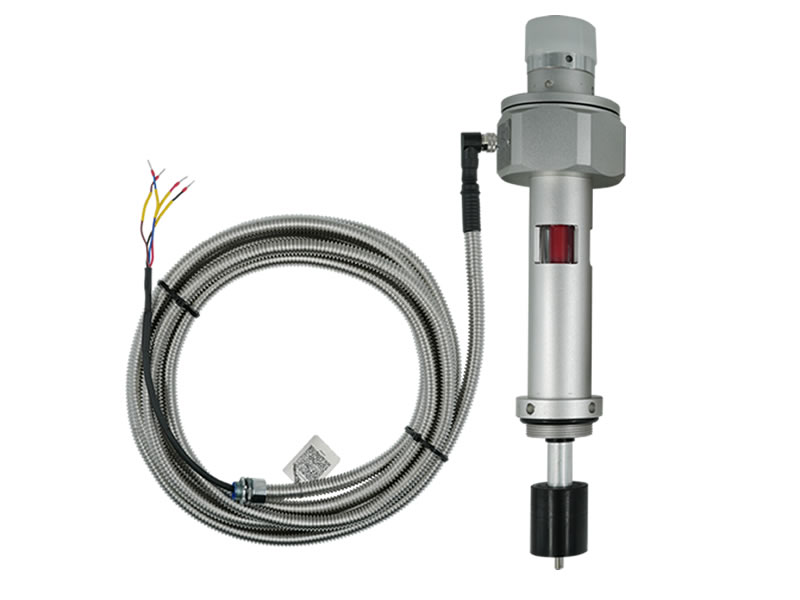
The monitoring system of oil-immersed transformers is relatively complex, involving oil, electricity, heat, mechanical and other dimensions. The following is a summary of the main monitoring parameters:
| Monitoring parameters | Monitoring tools | primary role | degree of importance |
|---|---|---|---|
| Top oil temperature | temperature sensor | Reflects thermal condition and overload risk | ★★★★★ |
| Winding hot spot temperature | Fiber optic thermometry or thermal modeling | Determine the rate of aging of the winding insulation | ★★★★★ |
| oil level | oil level meter/Level Sensor | Detecting oil leaks, reservoir abnormalities | ★★★★☆ |
| Dissolved gas (DGA) | Online Oil Chromatography Analyzer | Identify latent faults such as internal discharges, overheating, moisture, etc. | ★★★★★ |
| Partial Discharge (PD) | Ultrasonic/UHF transducers | Detection of insulation defects and discharge degradation | ★★★★★ |
| Core ground current | current transformer | Determining core multi-point ground faults | ★★★★☆ |
| Casing dielectric loss | Dielectric Loss Sensor | Monitoring of casing insulation deterioration and moisture | ★★★★☆ |
| On-load tap-changer status | Vibration/travel sensors | Detecting abnormal switch mechanical action | ★★★☆☆☆ |
| Ambient temperature and humidity | Temperature and humidity sensors | Supporting assessment of external environmental impacts | ★★★☆☆☆ |
Among them.Dissolved Gas Analysis (DGA)It is the most diagnostic value of oil-immersed transformer condition monitoring means, can identify internal abnormalities days or even weeks before the failure occurs, is the unique and irreplaceable monitoring project of oil-immersed transformer.
Fourth, what are the core monitoring parameters of dry-type transformers?
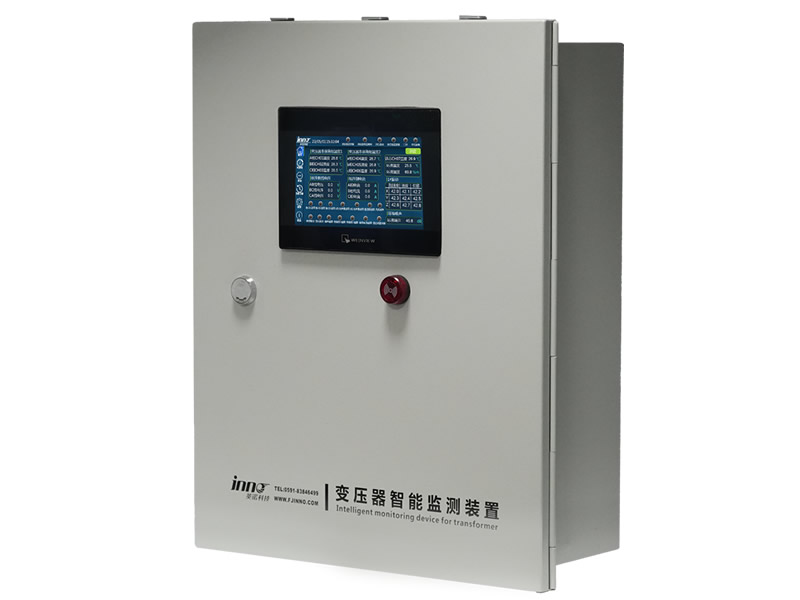
Dry-type transformers do not have insulating oil, and their monitoring system is more centered on temperature, mechanical condition and electrical operating conditions. Taking InnoTech PHM 300U transformer intelligent monitoring device as an example, the core monitoring parameters of dry-type transformer are as follows:
| Monitoring parameters | Monitoring tools | primary role | degree of importance |
|---|---|---|---|
| Three-phase winding temperature | Dry-change thermostats (PT100, etc.) | Prevents windings from overheating, triggering air-cooling start/stop | ★★★★★ |
| Core temperature | temperature sensor | Determine the core heat and loss abnormality | ★★★★★ |
| Ambient temperature and humidity | Temperature and humidity sensors | Assessing the impact of the operating environment on insulation | ★★★★☆ |
| Vibration monitoring | Vibration sensors | Identify loose cores, hidden mechanical failures | ★★★★☆ |
| Low Voltage Side Parameters | Current/Voltage Transformers | Analyze load levels and operational health | ★★★★☆ |
| Equipment life prediction | Integrated computational model | Estimating remaining life and annual load utilization | ★★★☆☆☆ |
| Loss and consumption statistics | Electrical Parameter Module | Auxiliary energy saving optimization and operating cost analysis | ★★★☆☆☆ |
It can be seen that dry-type transformers have fewer monitoring parameters overall than oil-immersed transformers, but theTemperature and vibrationare two absolute cores. Winding temperature exceeding the limit will not only accelerate the insulation aging, and in serious cases, even cause a fire; while vibration abnormalities are often the early signals of core loosening or winding deformation, which should not be ignored.
V. Oil-immersed vs. dry-type: comprehensive comparison of monitoring parameters
The following table provides a side-by-side comparison of the monitoring parameters of the two transformers to help quickly understand the focus and differences between them.
| Monitoring dimensions | Oil-immersed transformers | Dry-type transformer | instructions |
|---|---|---|---|
| Temperature monitoring | Top oil temperature + winding hot spot temperature | Three-phase winding temperature + core temperature | Differences in measurement point locations and methods |
| Dissolved gas (DGA) | ✅ Necessary monitoring items | ❌ Not applicable (no insulating oil) | Oil-immersed transformer exclusive |
| Oil level monitoring | ✅ Necessary monitoring items | ❌ Not applicable | Oil-immersed transformer exclusive |
| partial discharge | ✅ Important monitoring items | ⚠️ Optional (less frequently configured) | Oil changes are prone to internal discharges |
| Vibration monitoring | ⚠️ optional (for on-load switching) | ✅ Important monitoring items | Higher risk of loose cores in dry variables |
| Ambient temperature and humidity | ⚠️ Auxiliary Parameters | ✅ Important monitoring items | Dry change is more sensitive to ambient humidity |
| Electrical parameter monitoring | ⚠️ Auxiliary Parameters | ✅ Important monitoring items | Dependence on electrical parameters for dry-variable life assessment |
| Casing dielectric loss monitoring | ✅ Important monitoring items | ❌ Not applicable | Oil change casing structure exclusive |
| Core ground current | ✅ Important monitoring items | ⚠️ Optional | Oil change core ground fault is more common |
| Lifespan prediction | ⚠️ Optional (based on thermal modeling) | ✅ PHM 300U Built-in Features | Dry change can be calculated directly from electrical parameters |
| Applicable places | Outdoor substations, high voltage applications | Indoor, building, subway, hospital | Wide variation in installation environments |
| Protection level requirements | IP55 and above (outdoor) | IP20~IP54 (indoor mainly) | Selected according to the installation environment |
VI. What are the differences between the fault warning signals of the two types of transformers?
Understanding the differences in fault warning signals helps O&M staff to quickly determine the risk level and take the right action when alerted.
Oil-immersed transformer common warning signals
- The oil temperature continues to rise:Possible cooling system failure or overload, cooling unit needs to be checked and load level verified immediately.
- Elevated concentration of acetylene (C₂H₂):This is the most dangerous signal and usually means that an arc discharge has occurred internally and should be stopped and inspected without delay.
- The oil level continues to drop:Indicates the presence of an oil leak or a broken oil reservoir capsule, requiring an on-site inspection to confirm the point of leakage.
- Sudden increase in localized discharges:Combined with the DGA data, the comprehensive judgment is that there may be insulation defects, and precision diagnosis needs to be arranged.
- Abnormal core ground current:Suggests that the iron core is grounded at multiple points and needs to be de-energized to test the insulation resistance.
Common warning signals for dry-type transformers
- Winding temperature overrun:This is the most common alarm for dry-type transformers and may be caused by overloading,Cooling FansMalfunction or poor ventilation causes, need to check the cooling conditions immediately.
- The vibration amplitude is abnormally high:Suggests loose core bolts or deformed windings, need to schedule a power outage to inspect the mechanical structure.
- Ambient humidity is chronically high:High humidity environment will accelerate the epoxy resin insulation aging, need to check whether the dehumidification equipment is operating normally.
- Three-phase current imbalance:May reflect load imbalance or winding turn-to-turn short circuit, need to be combined with temperature data to comprehensively determine.
- Expected to have a significantly shorter lifespan:Monitoring devices such as the PHM 300U calculate the remaining life of the equipment in real time, and if the life prediction drops abnormally, the load level and operating conditions need to be reviewed.
VII. When installing a monitoring device, are the precautions the same for both?
Installation sessions are likewise markedly different and need to be treated separately.
Installation points of oil-immersed transformers
Oil-immersed transformers are usually installed in outdoor substations or underground oil-immersed rooms, where the environment is complex and electromagnetic interference is strong. Sensors need to be waterproof, anti-corrosion treatment, the signal cable should be shielded and away from strong power lines.DGA oil pipeline must be maintained in a gentle direction, to avoid the accumulation of gas bubbles affect the accuracy of gas sampling. The protection level of the device is generally required to be above IP55, and ensure reliable grounding.
Dry-type transformer installation points
Dry-type transformers are mostly installed in indoor distribution room, the space is relatively limited, the alignment needs to be neat and standardized. Temperature sensors should be installed close to the winding surface to ensure accurate measurement. Vibration sensor should be fixed in the transformer body metal frame, to avoid installing in the shell plate lead to signal distortion.PHM 300U and other intelligent monitoring device through the RS485 interface communication with the temperature controller, wiring should pay attention to the communication address settings, to ensure that the multi-sensor data correctly summarized. The protection level of indoor installation is generally IP20 ~ IP54 can meet the requirements.
Common Considerations for Both
No matter which kind of transformer, after the installation is completed, it is necessary to carry out full-parameter intermodulation test to confirm that the readings of each sensor are consistent with the actual value, the communication link is stable, and the alarm function is triggered normally before it can be put into operation formally.
VIII. How to choose the appropriate monitoring program according to the type of transformer?
After clarifying the monitoring differences between the two types of transformers, you can refer to the following ideas in the actual selection:
First, clarify the type of transformer and the use of the scene. Outdoor high-voltage main transformer gives priority to oil-immersed transformer full-parameter monitoring scheme; indoor medium and low-voltage distribution transformers (especially commercial buildings, subways, hospitals, data centers) are usually equipped with dry-type transformers, and priority is given to the selection of intelligent monitoring devices with the functions of temperature, vibration, electrical parameters and life prediction.
Secondly, according to the capacity and importance of the transformer to determine the depth of monitoring. 110kV above the important main transformer is recommended to configure a full set of oil-immersed, such as DGA, local discharge, casing dielectric loss and so on.Transformer monitoringModule; 10kV~35kV industrial special transformer can choose the combination of core parameters according to the actual budget; ordinary indoor dry distribution transformer is based on winding temperature monitoring, and vibration and electric parameter modules are added when conditions allow.
Finally, focus on communication protocol compatibility. Regardless of the oil change or dry change, the monitoring device should support Modbus RTU/TCP, IEC 61850 and other mainstream protocols, so as to facilitate access to the existing dispatching system or operation and maintenance platform, and avoid data islands.
IX. Comparison of relevant implementation standards and norms
Condition monitoring of oil-immersed transformers and dry-type transformers corresponds to different standard systems, which should be referred to in project implementation and product selection:
Oil-immersed transformer monitoring related standards
- DL/T 722--Guidelines for the Analysis and Determination of Dissolved Gases in Transformer Oil (DGA Core Basis)
- GB/T 7595-Operating transformer oil quality standards
- DL/T 1498--Transformer Condition Evaluation Guidelines
- GB/T 4703--Partial Discharge Measurement Standards
- Q/GDW 11304--Technical specification for on-line transformer monitoring device of the national power grid
Standards related to monitoring of dry-type transformers
- GB/T 10228-Dry-type power transformer technical parameters and requirements
- GB/T 17211--Load guidelines for dry-type power transformers (basis for winding temperature limits)
- IEC 60076-11-International standard for dry-type transformers, specifying temperature classes and insulation requirements
- GB/T 22072--General technical requirements for temperature controllers for dry-type transformers
It is recommended that suppliers be explicitly required to provide product compliance statements for the corresponding standards in the project bidding documents to ensure that the monitoring devices meet the requirements for practical applications.
Ten, Inotera: monitoring solutions covering both oil and dry change at the same time
In the actual project, a substation or distribution system often contains both oil-immersed transformers and dry-type transformers, if purchased separately from different manufacturers of monitoring devices, not only the management is complex, the later maintenance is also more troublesome.InnoTechAs a professional power equipment condition monitoring solution provider, it is able to cover the monitoring needs of two kinds of transformers at the same time and realize unified management.
Dry-type transformer monitoring: PHM 300U Intelligent Transformer Monitoring Unit
Inotera PHM 300U is a multi-parameter online monitoring device specially designed for dry-type transformers, which integrates three-phase winding and core temperature monitoring, ambient temperature and humidity monitoring, vibration monitoring, low-voltage side electric parameter acquisition, and built-in equipment life prediction and loss and consumption statistics. The device is equipped with an intuitive man-machine control interface, supports Modbus RTU protocol, and can be flexibly connected to the intelligent operation and maintenance background system. It helps users to upgrade from the traditional "periodic maintenance" to a more efficient "condition maintenance" mode, reducing the risk of failure and extending the life of the equipment.
Oil-immersed transformer monitoring: full-parameter online monitoring system
For oil-immersed transformers, Inotera also provides online monitoring systems covering core parameters such as oil temperature, oil level, dissolved gas, partial discharge, core clamping current, casing monitoring, etc., which support docking with the State Grid and the South Grid scheduling platforms to meet the monitoring needs of transformers of different voltage levels and capacities.
One-stop service covering the whole life cycle
Inotera provides a full range of services from solution consulting, product supply, installation and commissioning to later operation and maintenance support, factory direct supply, support for function customization, whether it is a single unit of equipment supporting or system level overall solution, can be flexible to deal with. If you are looking for a reliable condition monitoring solution for oil-immersed transformers or dry-type transformers, please contact INNOTEC for professional advice.
statement denying or limiting responsibility
This article is for general reference only, aims to introduce the oil-immersed transformer and dry-type transformer condition monitoring of the basic knowledge and differences between the comparison, does not constitute any engineering implementation, procurement decisions or technical programs only basis. The parameter indicators, standards and product introduction, the actual application should be combined with specific equipment models, site conditions and the latest standard requirements, by professional and technical personnel to assess and confirm. The author and publisher of this article do not assume legal responsibility for any direct or indirect losses arising from reference to the contents of this article.