
How to Assess the Value of Online Monitoring of Transformer Bushings: Dielectric Loss, Capacitance, and Long-Term Trends
Date: August 11, 2026, 06:43:44
- The value of online monitoring of transformer bushings lies in the continuous monitoring of dielectric loss, capacitance, leakage current, and phase-to-phase differences.
- When selecting a project, focus on measurement stability, terminal block compatibility, background curves, and historical records.
- Data on the condition of the casing must be compared over the long term to demonstrate the value of online monitoring.
- Once the data from the bushing is integrated into the platform, it becomes easier to view it alongside other status parameters of the main transformer.
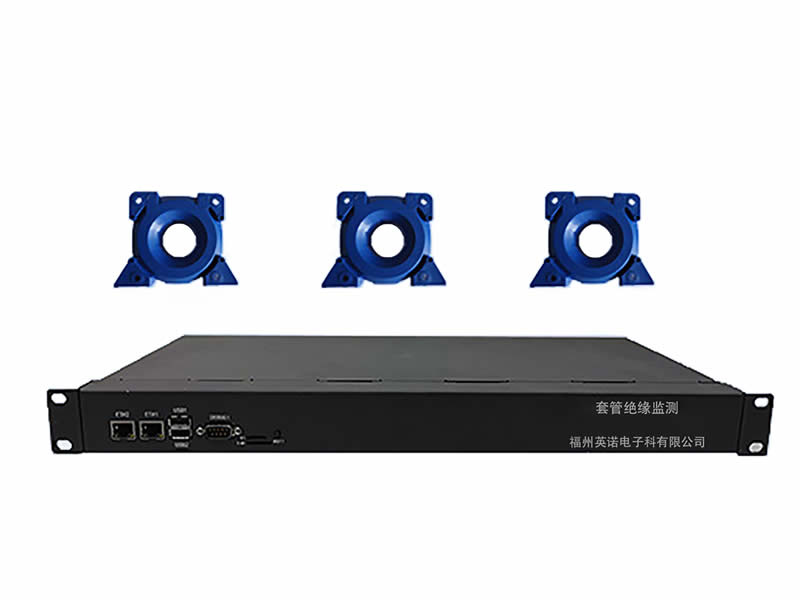
Bushings are critical insulation components in transformers. By continuously recording dielectric loss, capacitance, and leakage current, the online monitoring system makes it easier to track changes in the condition of the bushings over the long term.
1. What are the key parameters monitored in online casing monitoring?
Key parameters include dissipation factor, capacitance, leakage current, and phase information; phase-to-phase comparisons can also be performed as needed.
1.1 What Do Dielectric Loss Data Indicate?
Dielectric loss reflects changes in insulation loss and is an important indicator for monitoring the condition of bushings.
1.2 Why is it important to monitor changes in capacitance?
Changes in capacitance may indicate deviations in the bushing structure or the condition of the insulation.
2. What on-site conditions should be considered when selecting a casing online monitoring system?
Considerations include terminal wiring, installation space, signal routing, communication requirements, and backend integration.
2.1 Why Is Terminal Block Wiring Important?
The signal quality at the end of the screen affects the stability of the dielectric loss and capacitance measurements.
2.2 What are the consequences of insufficient installation space?
Insufficient installation space can make implementation and ongoing maintenance more difficult.
| Follow the Project | Key Data | Project Value |
| Dissipation | Changes in Insulation Loss | Check the Insulation Condition |
| Capacitance | Trends in State Shifts | Long-Term Comparison |
| Leakage current | Operational Status Data | Auxiliary Judgment |
| Alternating Contrast | Differences Within the Same Category | Identify Deviations |
3. Why is it important to look at long-term trends in casing data?
Long-term trends can show whether data is changing gradually and can also reduce misjudgments caused by individual fluctuations.
3.1 How is baseline data generated?
The baseline is derived from continuous monitoring data collected during the device's stable operation phase.
3.2 What is the value of inter-phase comparison?
By comparing phases, you can determine whether a particular phase deviates from the average for its category.
4. How are the bushing monitoring data integrated into the main transformer platform?
Once the casing data is uploaded to the platform, it can be viewed alongside data such as oil chromatography and partial discharge measurements. Online Monitoring Device for Dielectric Loss and Capacitance of Lining Tubes This allows relevant data to be entered into a centralized backend system, facilitating long-term viewing and maintenance.
4.1 Which fields should be displayed on the admin page?
The display should show the device location, phase, loss tangent, capacitance, leakage current, and last update time.
4.2 Should historical curves be viewed by phase?
Yes. Viewing by phase makes it easier to spot differences.
5. What should be kept in mind when installing a casing monitoring system?
Verify the terminal wiring, sensor installation, shield grounding, and communication integration testing.
5.1 Why Is Shield Grounding Important?
Good shielding helps improve signal stability.
5.2 What Data Should You Monitor During the Debugging Phase?
Check the real-time values, phase-to-phase relationships, curve continuity, and background records.
6. How can online data from the casing be utilized for long-term maintenance?
Status management can be performed later using trends, inter-unit differences, historical records, and equipment profiles.
6.1 What should be done if the differences between phases continue to widen?
Further analysis should be conducted in light of on-site conditions and other monitoring data.
6.2 How Can Equipment Records Be Helpful?
Equipment records clearly link bushing data to specific main transformers, phases, and locations.
If you need to configure online monitoring systems for substations, transformers, GIS, switchgear, and other applications, please contact Yinnotongda for technical support. Service Hotline: 13959168359 (same number on WeChat).
Disclaimer: This article is intended solely for technical exchange and reference purposes and should not be used as a basis for on-site operations, equipment modifications, or operational safety assessments. Specific solutions and parameters should be determined based on on-site conditions and official technical documentation.