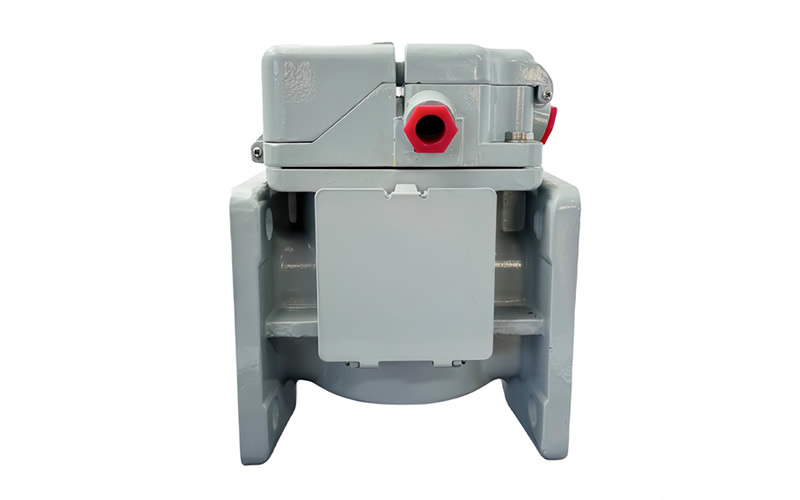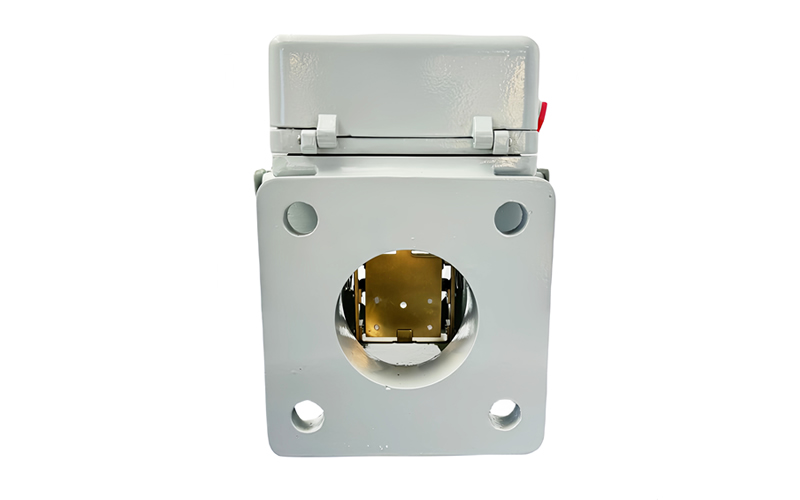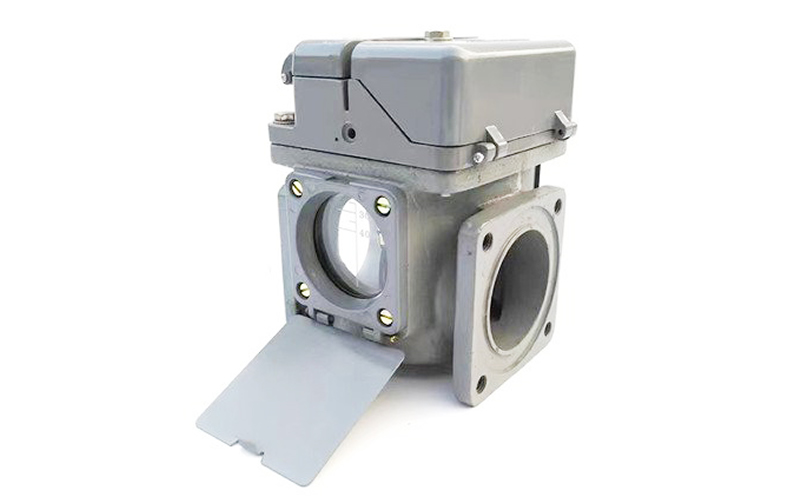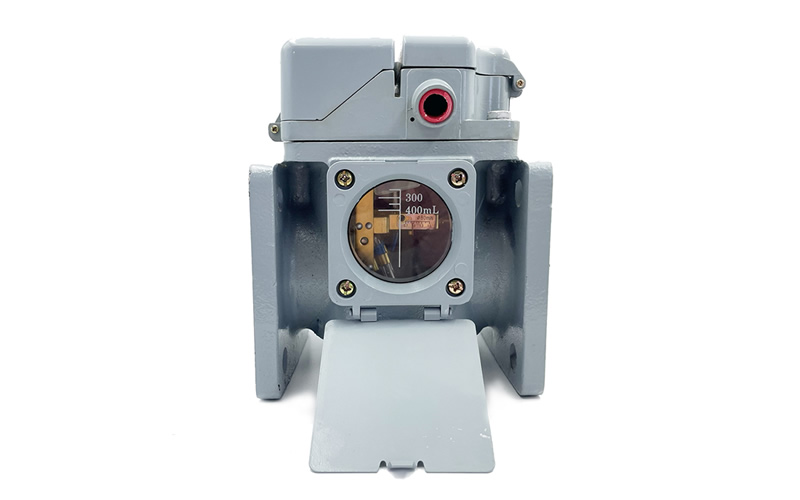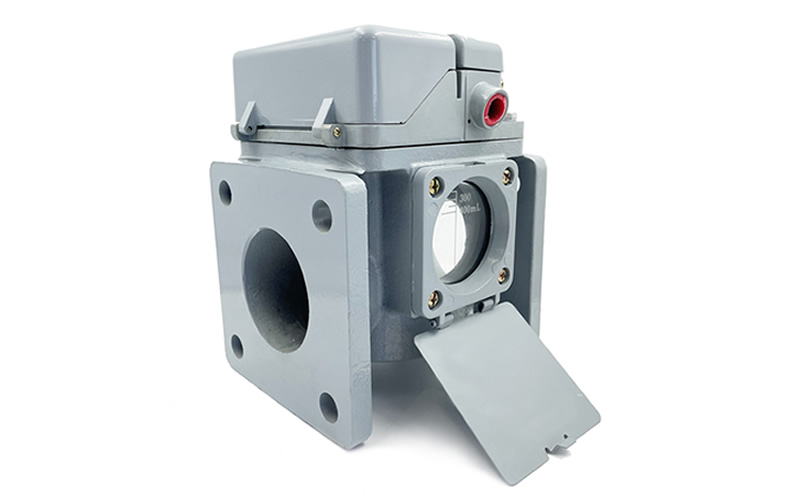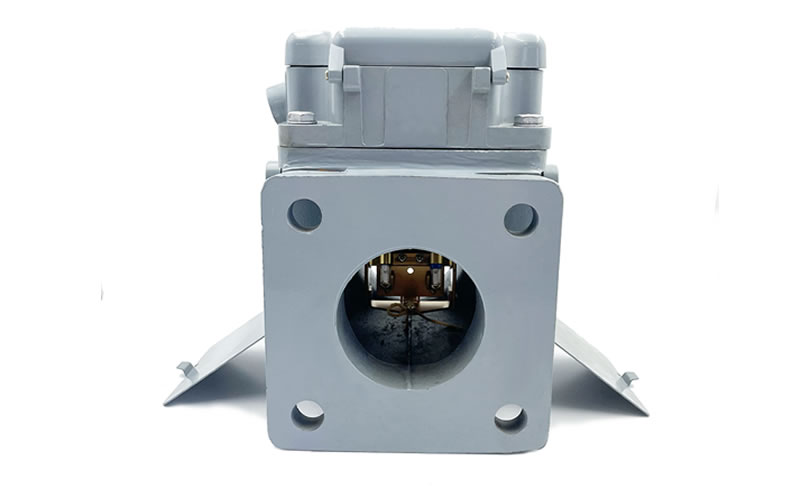
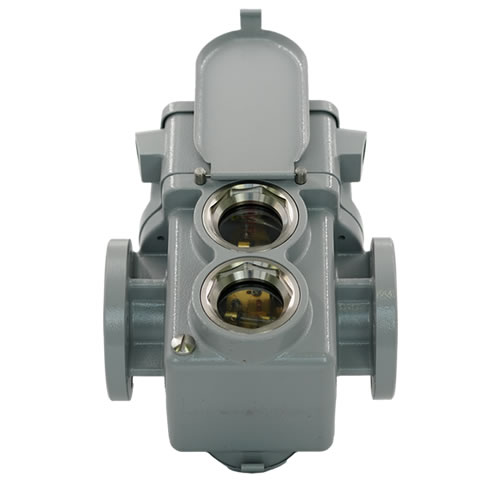
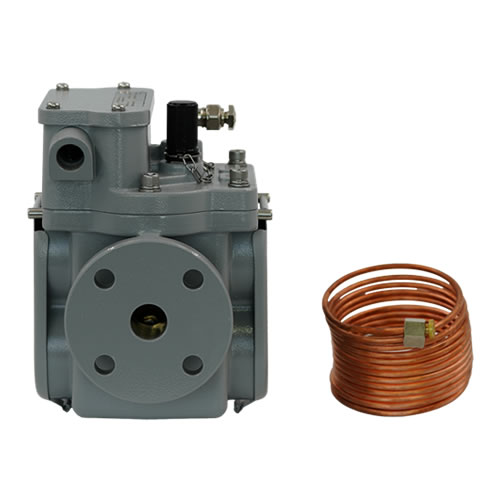




QJ SeriesGas RelayIt is a protective device used in oil-immersed transformers and on-load tap changers.Gas RelayInstalled on the connecting pipe between the transformer tank cover and the oil reservoir, it can be fitted with a vent pipe to facilitate ground venting and sampling. In the event of an internal transformer fault that generates gas in the oil or causes oil flow surges, it causes the relay contacts to operate, thereby closing the designated control circuit and promptly issuing a signal or automatically tripping the transformer.
Common Relay Models (Partial display Contact us for more).
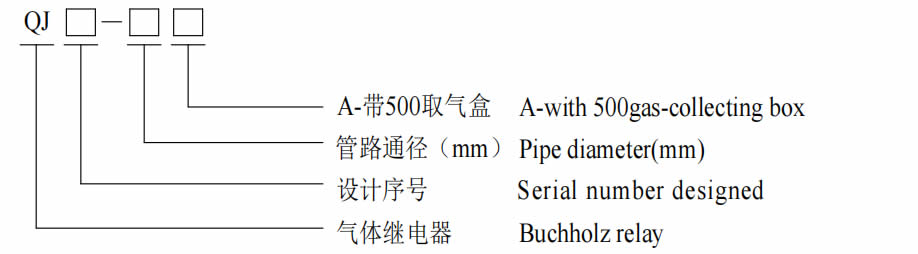
QJ9-25A, QJ3-50, QJ3-80, QJ2-80, QJ2-80A, QJ1-50, QJ1-50A, QJ1-50A-TH, QJ2-40, QJ3-40, QJ4 -50, QJ4-50A, QJ4-50A-TH, QJ1-80, QJ1-80A, QJ4-80, QJ4-80A, QJ4-80A-TH
QJ1-80A-TH
Working Principle
When the transformer is operating normally, the relay is filled with transformer oil. If a minor fault occurs during transformer operation, gases produced by the decomposition of transformer oil will accumulate in the upper part of the relay tank, forcing the relay float to descend. When the float reaches a predetermined position, a magnet closes the signal contacts, triggering an alarm signal. If a leak in the transformer causes the oil level to drop, an alarm signal is also triggered. If a serious fault occurs inside the transformer, an oil surge will occur, creating oil flow within the piping that impacts the relay’s baffle. When the baffle moves to a predetermined position, the electromagnet closes the trip contacts, cutting off all power to the transformer.
Technical Parameter
1) Operating temperature: -40°C to 100°C
2) Contact rating:
| Power Source Type | operating voltage | Operating Current | Reactive load |
| AC | 220 V | 0.3 A | Power factor
cos Φ ≤ 0.6 |
| DC | Time constant
S ≤ 5 × 10⁻³ s |
3) Job Characteristics
| norm | QJ-25 |
| Oil speed setting range (m/s) | 1.0 ± 0.1 |
| Gas aggregation quantity (ml) | 200-250 |
4) Sealing performance
The relay is filled with transformer oil and pressurized to 200 kPa at room temperature; it remains leak-free for 20 minutes.
5) Insulation properties
| Test items | Between the terminals of the contacts | Between the terminal and ground | Signal and trip terminals |
| Withstand frequency voltage and time | 2000 V for 1 minute | 2000 V for 1 minute | 2000 V for 1 minute |
6) Seismic performance
When the vibration frequency is between 4 and 20 Hz and the acceleration is 40 m/s², the relay will not malfunction.
Structure, appearance and dimensions
| model number | Contact Description | Wiring Diagram |
| QJ9-25 | Two heavy, one light, and one low on oil | 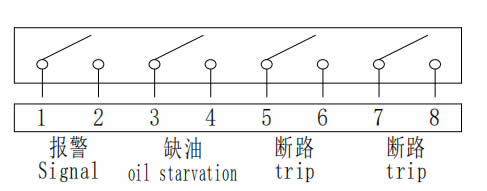 |
Installation and use
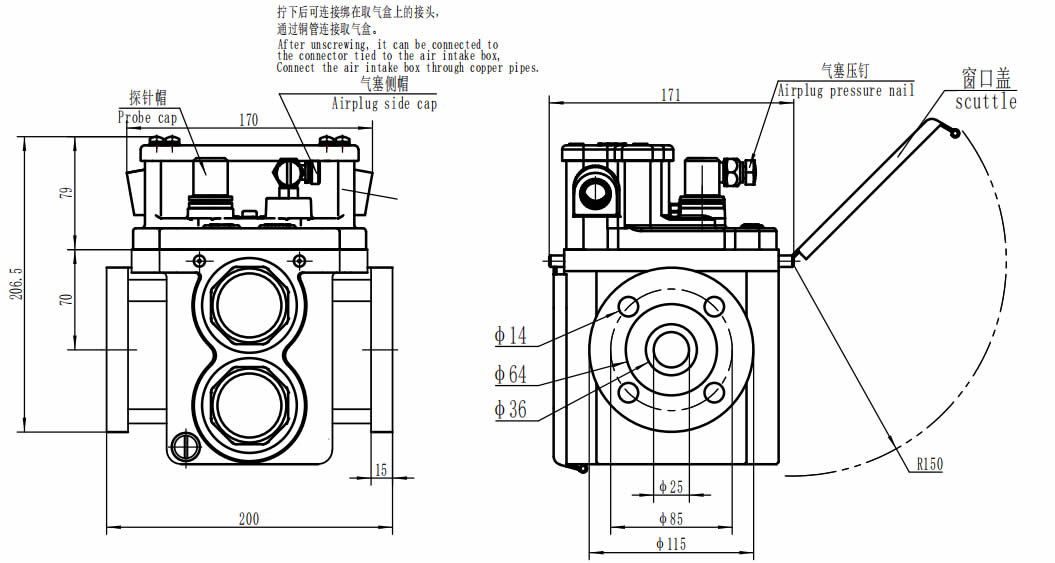
1) The appearance and dimensions of the QJ-25 relay are shown in the figure.
2) Install the relay in the connecting pipe between the transformer tank and the oil reservoir, ensuring that the arrow on the relay points
Toward the oil storage tank.
3) After installation is complete, open the oil valve in the connecting line and simultaneously open the air bleed valve to purge the air, ensuring the relay is filled with oil.
Transformer oil: If oil comes out of the breather plug, tighten it.
4) Unscrew the cover and press the probe to check the reliability of the “Alarm” and “Open Circuit” contacts.
caveat
1) Before installing and using a new relay, you must first remove the relay core and cut off the straps used to secure it during shipping.
2) Relays must be tested using a dedicated testing device before they can be installed and put into service.
3) A spring is mounted on one side of the baffle; by adjusting the length of the spring, the oil flow velocity that triggers the trip contacts can be adjusted. The rest
Components must not be moved arbitrarily.
4) When replacing or adding parts near magnets and reed switch contacts, use non-magnetic materials.
5) Magnets must not be subjected to violent vibrations, nor should they be placed in strong magnetic fields or in environments where temperatures exceed 100°C or fall below -40°C.
6) Do not arbitrarily disassemble or remove the reed contacts; in particular, do not bend the leads at the base to avoid damage.