



Product OverviewContact us for detailed product information and customized solutions!
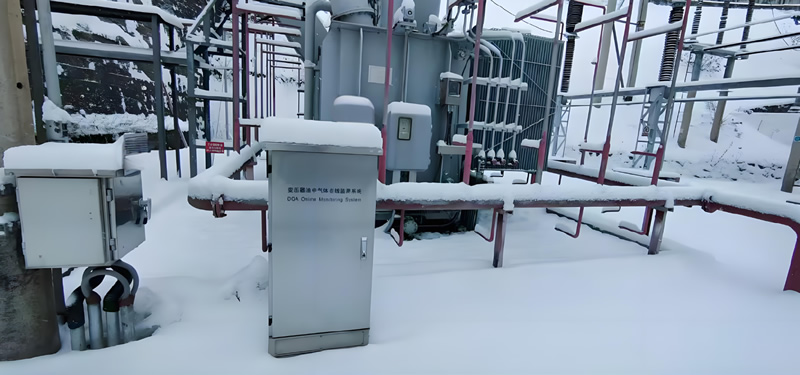
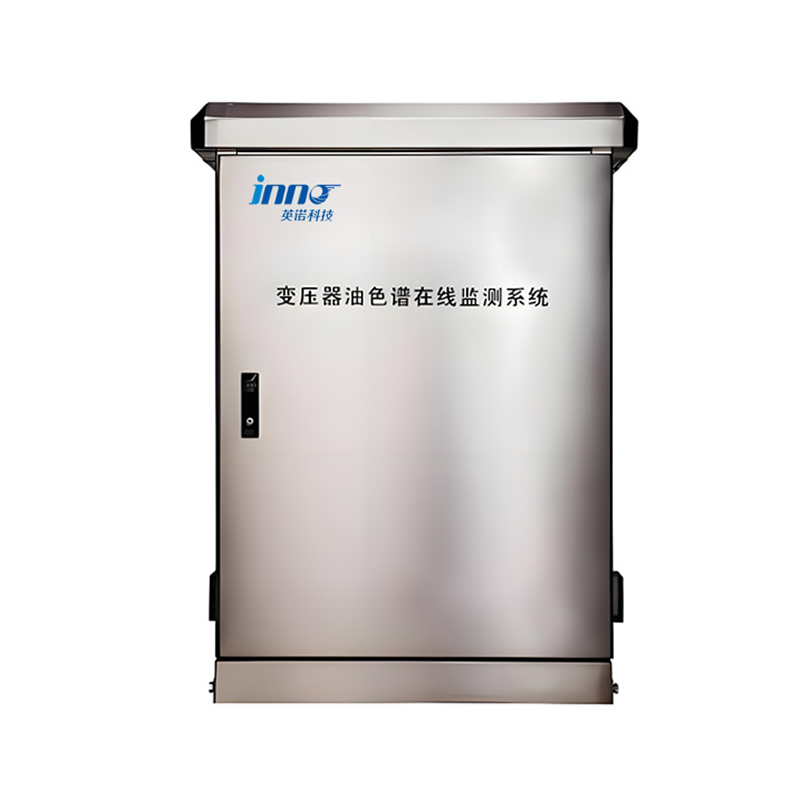
Transformer oil chromatography online monitoring device is used toDissolved gases in oil-immersed transformer oils(used form a nominal expression)Online (DGA)Analysis system, the equipment can measure seven characteristic gases reflecting transformer fault information - hydrogen (H2), carbon monoxide (CO), carbon dioxide (CO2), methane (CH4), ethane (C2H6), ethylene (C2H4), acetylene (C2H2), but also according to the customer's needs to increase the micro-water Monitoring.
The monitoring data can be uploaded to the background monitoring system in real time to realize remote centralized management.
Technical characteristics and application advantages
- be in favor of Long-term on-line, timed automatic monitoring
- Real-time mastery of transformer internal operation status and fault development trend
- Rapid detection of potential faults for improved operational safety
- Compatible with existing power system SCADA / Monitoring Platformseamless integration
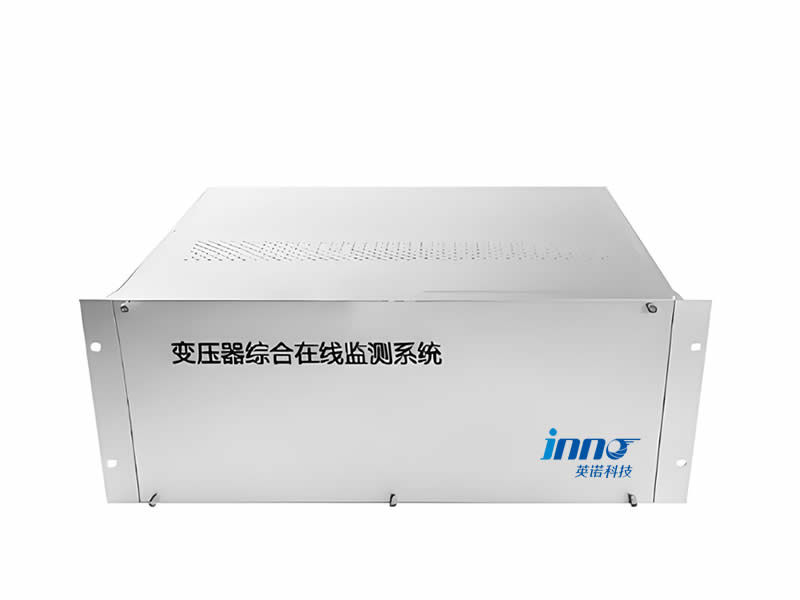
The device is based on an advancedGas Chromatography Analysis Techniques and Troubleshooting AlgorithmsIt synthesizes the characteristics of online monitoring technologies at home and abroad, and is suitable for monitoring the condition of key transformers in substations and important power users.
System Components
Transformer oil chromatography online monitoring device consists of the following three parts:
- Online monitoring device for gases in transformer oil (front-end equipment)
- Back-office monitoring and data management systems
- Communication and connection parts (cables, oil connections, etc.)
Monitoring Functions and Detection Parameters
The device can detect on-line reflecting the transformer fault characteristics of theSeven key gases::
- Hydrogen (H₂)
- Carbon monoxide (CO)
- Carbon dioxide (CO₂)
- Methane (CH₄)
- Ethane (C₂H₆)
- Ethylene (C₂H₄)
- Acetylene (C₂H₂)
At the same time, according to user needsExtended micro water content monitoringFurther improve insulation condition assessment capabilities.
Working Principle
The device usesOn-line oil and gas separation and gas chromatography analysis technologyThe basic workflow is as follows:
- The system fully circulates the transformer oil and ensures that the sampled oil is representative.
- A small amount of oil sample is taken into the oil/gas separation unit and the dissolved gas is separated by vacuum.
- The separated characteristic gas enters the chromatographic column to realize the separation of gas components.
- The gas is pushed through the sensor by the carrier gas and converted into an electrical signal.
- Electrical signals are converted to digital signals by high-precision A/D.
- The data is uploaded to the backend system for analysis, storage and display via RS485 communication.
Monitoring cycles and communication methods
- Fastest sampling and analysis cycle: ≤ 2 hours / time
- Detection period can be set flexibly according to operational requirements
- be in favor of N:1 telemetry communication mode
- Multiple monitoring devices can be connected to the same intelligent controller to achieve centralized management
- Monitoring data can be shared with the power system's internal SCADA platform
Installation and Maintenance
- be in favor of Installation of transformers under energized operationNo need for power outages.
- Simple installation of the device, only need to connect the oil inlet and outlet pipes
- Connected to the transformer's reserved interface via flange, without affecting the original operating structure
Applicable Scenarios
- Substation main transformers and critical distribution transformers
- High-load operation or critical power supply locations
- Electricity consumers who need to realize condition-based maintenance and online monitoring
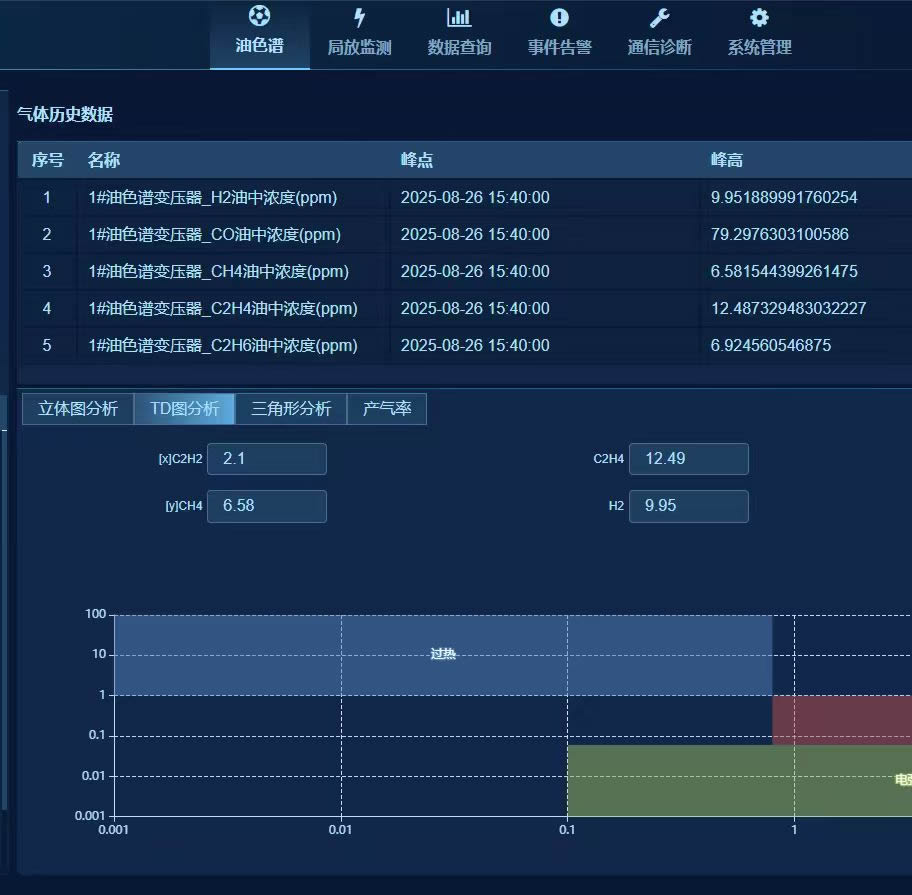
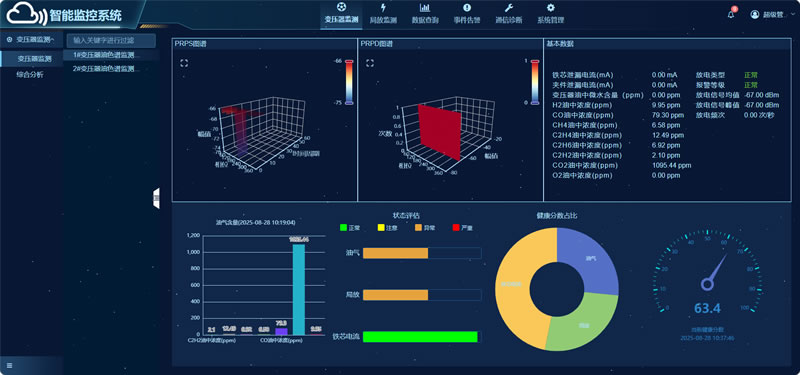
Demonstration of oil chromatography monitoring software interface
Technical indicators
| Functional indicators | |
|---|---|
| Detection cycle: | Minimum 2 hours, maximum test cycle can be set arbitrarily; |
| Data storage: | ≥10 years; |
| Degassing method: | Dynamic vacuum; |
| Alarm Settings: | Alarm for each gas concentration exceeding the limit; |
| Output results: | Hydrogen (H2), carbon monoxide (CO), carbon dioxide (CO2), methane (CH4), ethane (C2H6), ethylene (C2H4), acetylene (C2H2) and the total hydrocarbon values and their concentration spectra, the three-ratio value, the preliminary diagnostic results of David's Triangle, the trend of the historical data charts, etc., and the micro-hydraulic and other optional according to customer demand; |
| Communication methods: | RS485, RJ45, etc; |
| Communication protocols: | MODBUS, IEC61850, etc. |
| Online monitoring device for dissolved gases in full-component oil Technical indexes | ||
|---|---|---|
| detection parameter | Detection range (μL/L) | Measurement Error Limits |
| Hydrogen H2 | 2-20 | ±2 μL/L or ±30%[1] |
| 20-2000 | ±30% | |
| Acetylene C2H2 | 0.5-5 | ±0.5 μL/L or ±30% |
| 5-1000 | ±30% | |
| Methane CH4 | 0.5-10 | ±0.5 μL/L or ±30% |
| 10-1000 | ±30% | |
| Ethane C2H6 | 0.5-10 | ±0.5 μL/L or ±30% |
| 10-1000 | ±30% | |
| Ethylene C2H4 | 0.5-10 | ±0.5 μL/L or ±30% |
| 10-1000 | ±30% | |
| Carbon monoxide CO | 25-100 | ±25 μL/L or ±30% |
| 100-5000 | ±30% | |
| Carbon dioxide CO2 | 25-100 | ±25 μL/L or ±30% |
| 100-15000 | ±30% | |
| H2O (optional) | 1 to 100 | ±1 μL/L or ±15% |
Measurement Repeatability Requirements
Under the repeatability condition, the relative standard deviation RSD of 6 test results ≤ 5%.
Minimum Detection Cycle
The minimum detection period of the device is less than or equal to 2 hours.
Requirements for the number of carrier gas uses
The number of times the carrier gas is used is more than or equal to 400 times/cylinder, if the optional carrier gas generator is equipped, there is no need to change the gas cylinder again.
| External configuration | |
|---|---|
| Equipment Dimensions: | 650×500×1300mm, 110kg. |
| Backstage monitoring screen (optional) | 800 x 600 x 2260mm, 55kg. |
| RS-485 communication cable: | Armored, flame-retardant, fully shielded twisted pair cable, 4-core. |
| Fiber optic Ethernet: | Multimode (IEC61850 option). |
| Inlet and outlet fuel lines: | Specialized purple copper tube, Φ6×1. |
| Inlet and outlet valves: | Professional post survey engineering packages. |
| Air conditioning: | Optional according to project requirements. |
| Carrier gas generator: | Optional according to project requirements. |
| operating environment | |
|---|---|
| Working power supply: | AC220V ±15%, 50Hz ±1Hz, 800VA or 1200VA (according to the project optional heat tracing cable). |
| Detect the oil temperature: | 0°C to 100°C. |
| Ambient temperature: | -40℃~+65℃. |
| Relative Humidity: | 5% to 95% (inside the product, no condensation or icing). |
| Atmospheric pressure: | 80kPa to 110kPa. |
| Maximum wind speed: | 35m/s (10m above ground, 10min average wind speed, outdoor). |
| Maximum daily temperature difference: | 25°C (outdoors). |
| Intensity of sunlight: | 0.1W/cm2 (wind speed 0.5m/s, outdoor). |
| Ice cover thickness: | 10mm (outdoor). |
| Protection Rating: | IP55. |
| System Configuration |
|---|
| Transformer oil gas online monitoring device: 1 set; |
| Backstage monitoring computer (including system monitoring software package): 1 set (optional according to the project needs); |
| Backstage monitoring screen: 1 (optional according to the project needs); |
| Communication cable: 1 set; |
| Power cable: 1 set; |
| Special configuration oil pipe, inlet and outlet flange: 1 set; |
| Air conditioner: 1 set (optional according to project needs); |
| Carrier gas generator: 1 set (according to the project needs to match). |